Bryton is a Taiwanese brand founded in 2009, specialising in high-performance, affordable GPS bike computers for road, gravel, MTB, and indoor cycling. Initially considered a budget brand, Bryton has matured, evolving into a hardware-focused, high value proposition for enthusiasts and performance driven riders. The company focuses on delivering premium features - large colour touchscreens, long battery life, offline navigation, Climb Challenge, and full sensor compatibility - at 40-60% lower prices than Garmin or Wahoo equivalents.
Bryton emphasises value, reliability, and user-friendly design without sacrificing core functionality, making them a strong choice for riders who want maximum capability for the money.
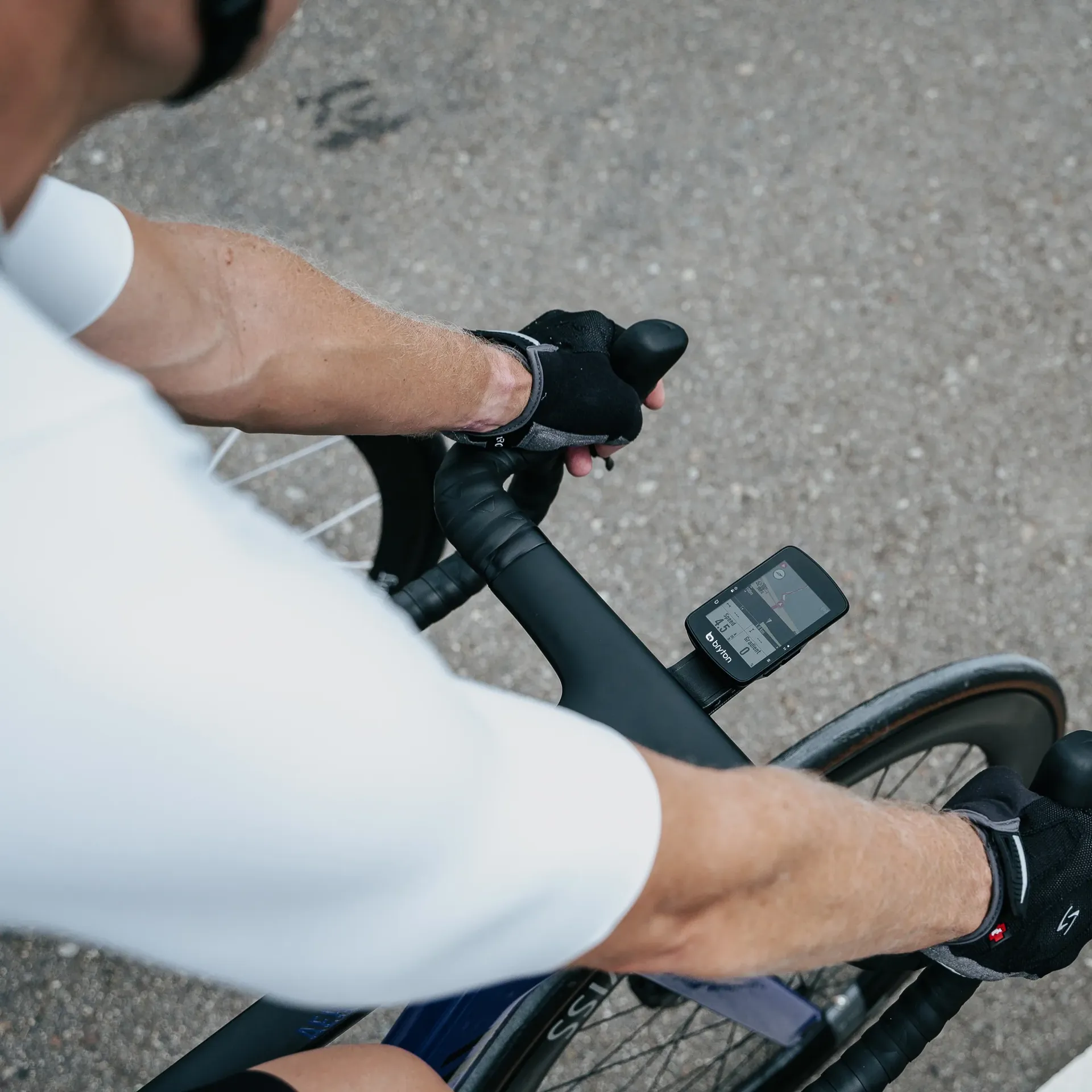
Bryton’s lineup is tiered by screen size, battery life, navigation sophistication, and advanced training tools. All models support ANT+/Bluetooth sensors (power, HR, cadence, radar, lights, Di2/eTap), smart trainers, and auto-sync to Strava/TrainingPeaks/Komoot, with key variance coming in the form of routing capability and advanced features.
| Tier | Models | Screen | Battery Life | Key Features | Best For |
|---|
| Entry | Rider 15 Neo, 17, 320, 420, 460 | Mono LCD or small colour | 30–35+ hrs | Basic GPS, simple navigation, 77+ data fields | Beginners, commuters |
| Mid-Range | Rider 550 | 2.8" colour LCD | 37 hrs | Turn-by-turn navigation, Intersection Snapshot | Everyday riders on a budget |
| Mid-Range+ | Rider 650 | 2.8" colour touch | 33 hrs | Full OSM maps, Climb Challenge, programmable button | Value-conscious performance riders |
| Premium | Rider S510 | 2.8" colour touch | 30 hrs | Climb Challenge 2.0, advanced workouts | Serious riders wanting modern features |
| Flagship | Rider S810 | 3.5" colour touch (curved glass on S810) | 50 hrs | Climb Challenge 2.0, Strava Live Segments, voice search, full offline maps | Long-ride / ultra riders / Performance focused |
Key differences by tier:
Screen & UI: Each tier benefits from progressively larger, brighter screens with premium features like touchscreens appearing in the mid+ tier and slimmer bezels in S-series.
Battery: While class leading across all models, battery life is dramatically better in higher tier models and this is especially true of the latest S-series 510 and 810.
Navigation & Climbing: Basic navigation (turn by turn) in entry-level evolves through to full offline maps and real-time Climb Challenge 2.0 in premium models.
Extras: Premium models add Strava Live Segments, voice search, additional data fields (up to 12), and refined ergonomics.
Bryton's position in the market is an increasingly strong one and at the heart of their appeal is value-driven innovation. The brand focuses exclusively on cycling GPS computers, allowing it to refine key areas that matter most to riders, chief among them: accuracy, battery life, screen clarity, and connectivity. Bryton’s recent Rider series, particularly the S510 and S810, showcases how the brand competes on advanced technology, navigation capabilities, and training metrics - all without sacrificing accessibility or cost-effectiveness.
Compared with Garmin, Bryton offers 90% of the functionality at roughly half the cost. For example, the Bryton Rider 650delivers a 33-hour battery, a colour touchscreen, and ANT+/Bluetooth support for £150, while a comparable Garmin Edge 550 costs £380. As the first mover, it is inevitable that Garmin's software shows more polish and there are additional (though many may argue superfluous) training metrics, it is simply a matter of time before Bryton's already impressive software suite is equal to it.
Against Wahoo, Bryton stands out for its longer battery life and richer onboard navigation, though Wahoo retains an edge in ecosystem polish and app experience. Riders who prioritise simplicity and seamless device pairing may still prefer Wahoo, while those looking for an affordable, feature-rich device will find Bryton’s offering more attractive.
In short, Bryton matches or beats both Garmin and Wahoo on core hardware (screen size, battery life, navigation) while costing far less. The only real trade-off is a simpler companion app and fewer deep training analytics than Garmin.
In the current cycling GPS landscape, Garmin still dominates the high end, but Bryton is firmly challenging that hierarchy. Publications like BikeRadar have noted Bryton’s Rider 650 as the “best-value performance GPS tested”, while its newer S-series models push into pro-level capability. Bryton’s competitive pricing, steady software refinement, and focus on real-world cycling needs, place it in an appealing position: premium performance at mid-tier prices.
Bryton are the ideal choice for riders who want a modern, feature-rich computer for long rides, training, or racing but don’t need the minutiae Garmin’s advanced metrics or Wahoo’s ultra-minimalist philosophy. If you ride a lot and value screen size, battery endurance, and bang-for-buck, Bryton is currently one of the strongest options on the market.