GUSTO GTG GRAVEL BIKES
Gusto do things a particular way. And it's the right way.
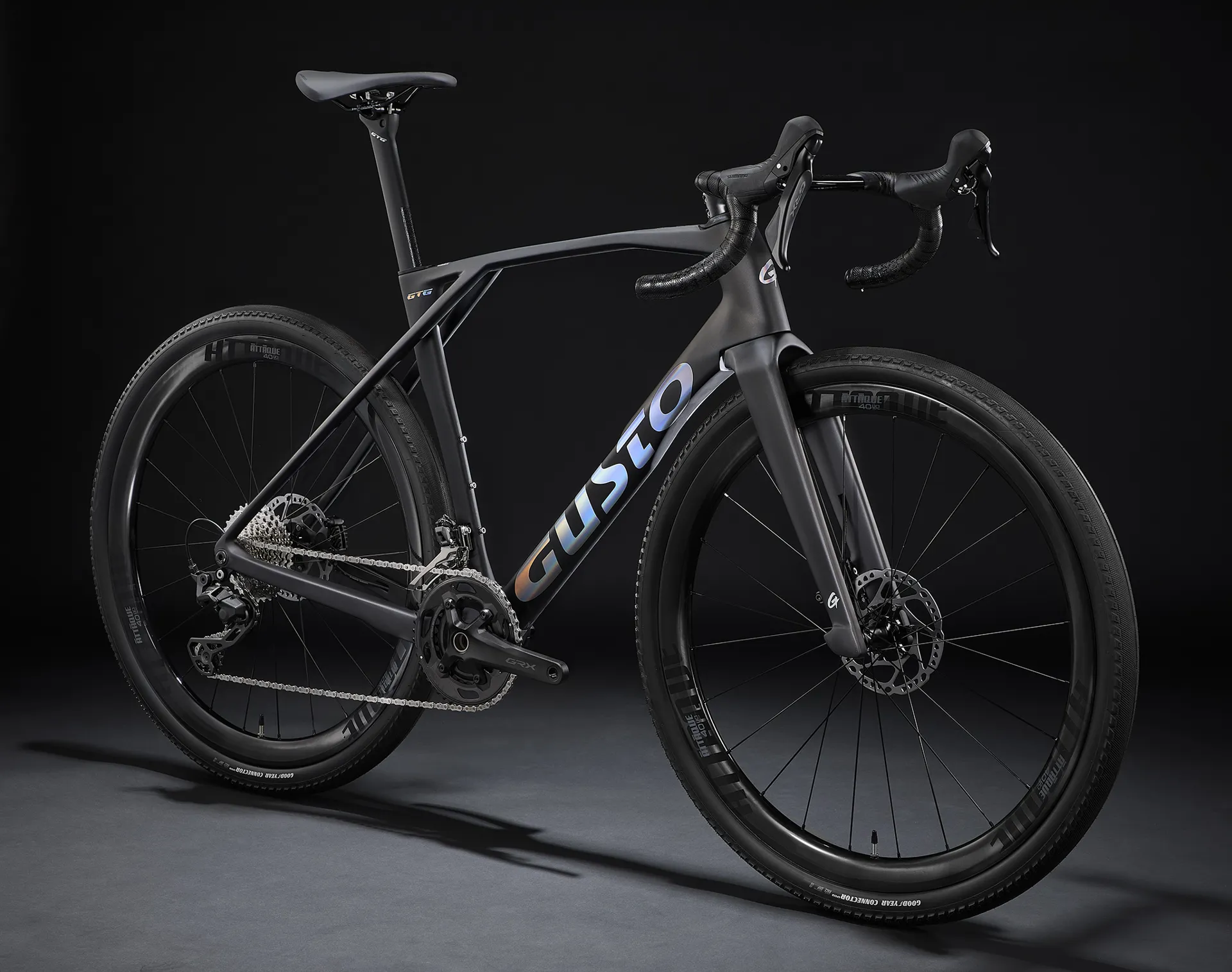
As it should, the frame comes first, it is the same frame all the way up the range, and what changes as the price rises is the kit hanging off it. The GTR works that way and the GTG, their new gravel bike, does the same. In addition, all available GTG builds roll on the same Attaque G100 carbon wheels and the same G1 integrated gravel one-piece bar. That is worth understanding before anything else, because it means the cheapest GTG is not a lesser bike. It is the same bike with different transmission.
The frame is Japanese high-performance carbon, and Gusto lay Innegra into it alongside the carbon fibre. Innegra is a shock-absorbing fibre from the United States, and the composite Gusto build with it is the thing they call I.L.C., for Innegra Latex Composite. Their claim is that it improves shock absorption and frame stiffness at the same time, which is the trick every gravel frame is trying to pull off: enough rigidity to put the power down, not so much that six hours of rutted tracks leaves a rider hollowed out. The fibre is there to take the buzz out before it reaches the body, while reducing weight and maintaining the stiffness that drives confident handling.
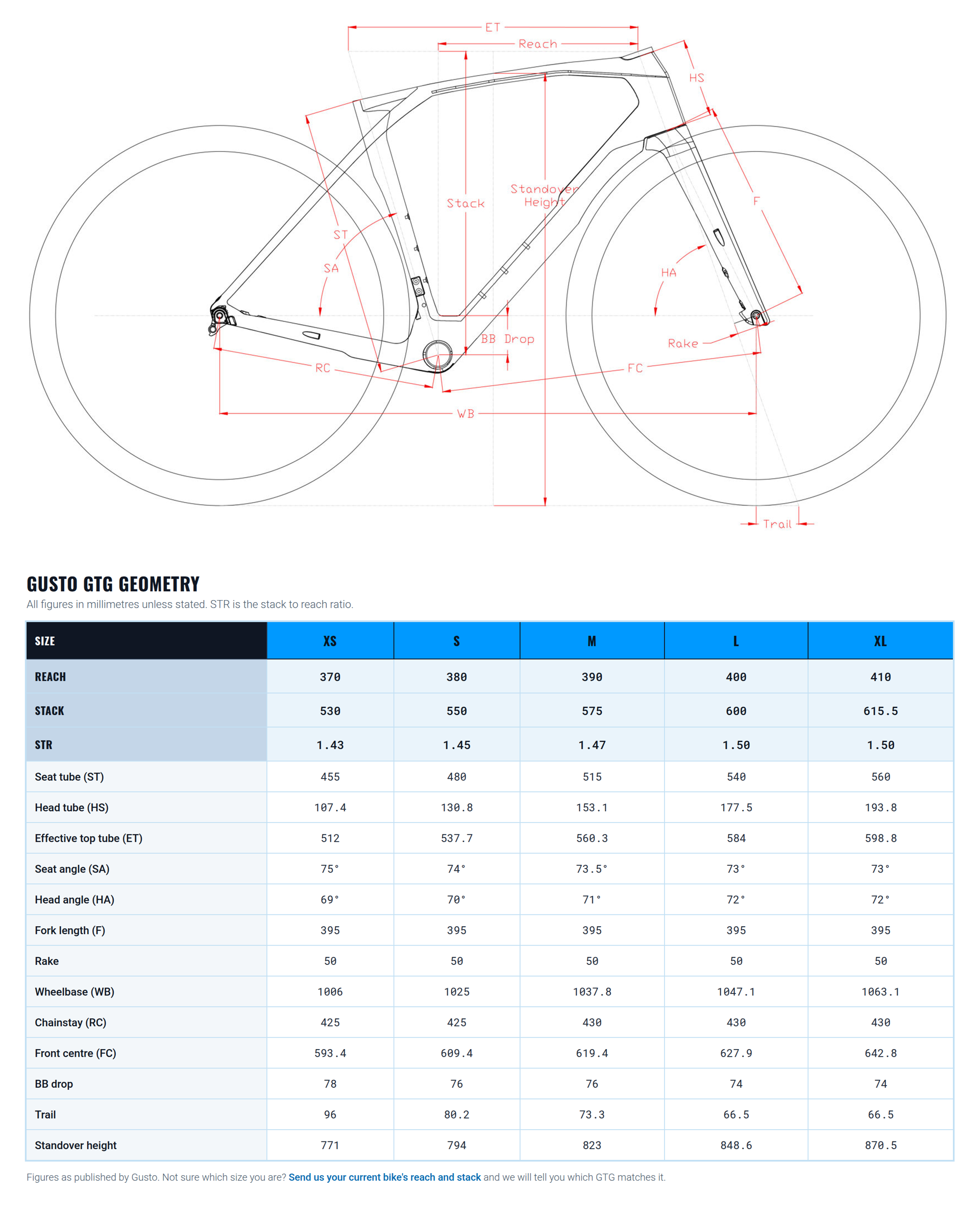
As you would expect, geometry runs higher in the stack and shorter in the reach than a road frame, and the position is one which Gusto say puts a rider in an aero position without the fatigue, and keeps the bike stable but quick enough to sprint. The numbers back the description. A medium carries 575mm of stack against 390mm of reach, a ratio of 1.47, and the range runs from 530 over 370 on the XS to 615.5 over 410 on the XL. A gravel bike spends a good deal of its life on loose surfaces where a rider wants weight off the front wheel and eyes further up the trail, and folding yourself over a long, low front end achieves neither of those things. The greometry also lends itself to riders that can't quite fit a GTR in terms of aggressiveness of position. Married with the carbon grade, the geometry opens the GTG up to road use with the right choice of tyres - and the wheels are happy to accommodate down to a 35mm. Two wheelsets and you have two bikes.
The rest of the chart is revealing. Chainstays are 425mm on the two small sizes and 430mm on the rest, which is short for a frame that swallows a 50mm tyre, and short stays are what make a gravel bike change direction rather than plough. Head angle opens from 69 degrees on the XS to 72 on the L and XL, with fork rake held at 50mm throughout, so trail falls from 96mm on the smallest frame to 66.5mm on the largest. That is a deliberate choice: the small sizes get the extra stability, the big sizes get the quicker steering, and nobody ends up on a frame that handles like a different bike because of their stature. Bottom bracket drop runs 78mm down to 74mm across the range. Gusto also describe a rear-biased centre of gravity and chainstays tuned around it, the intent being stability on descents, grip in corners and traction when climbing on a surface that would rather the rear wheel spun.
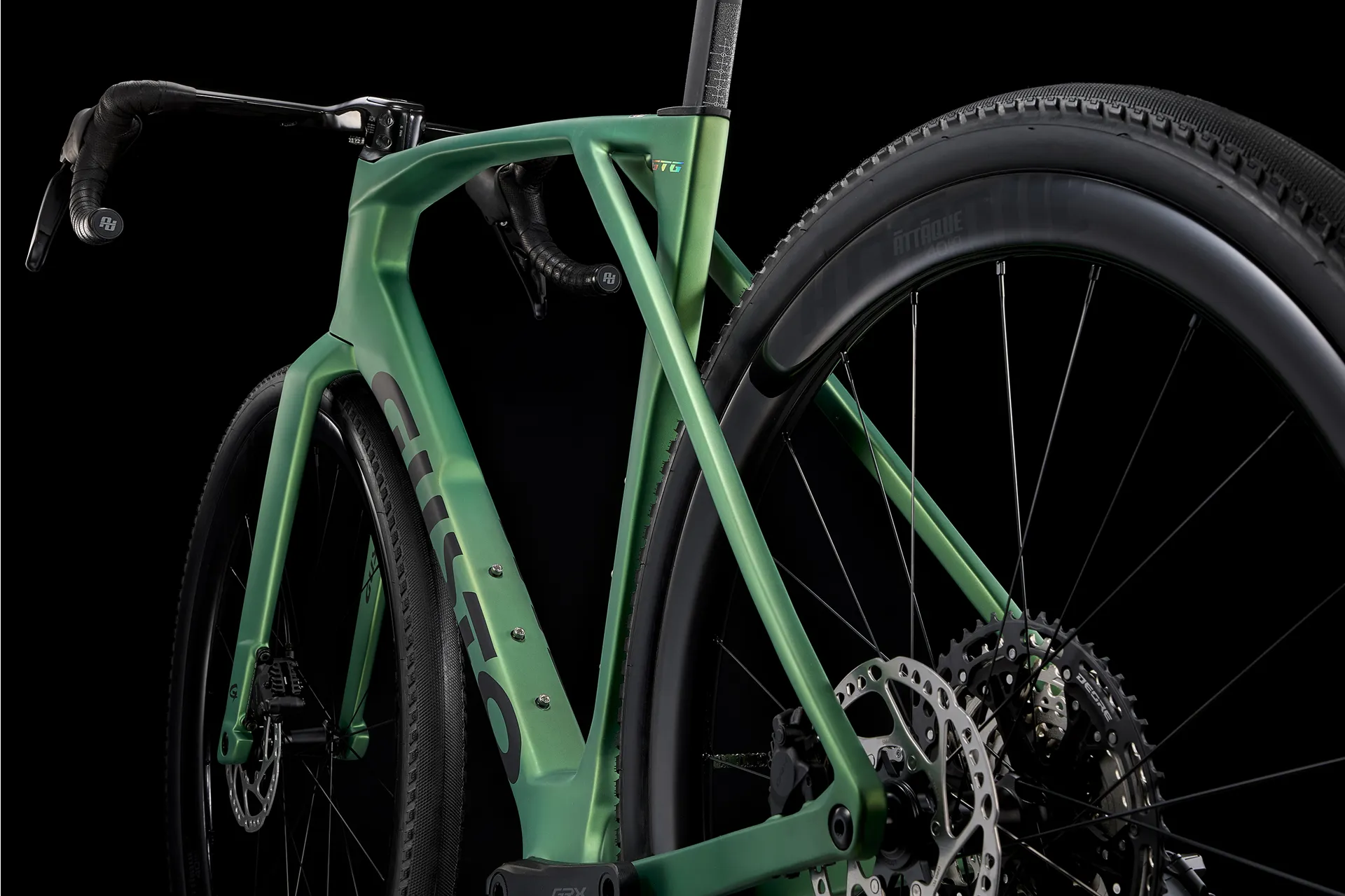
Tyre clearance is 45 to 50mm, which is the current sweet spot for gravel in this country: enough for a 50mm balloon when the route is genuinely rough, and enough restraint that the bike still feels like a bike on tarmac. Note that the wheels take more than the frame does, so the frame is the limit (see the wheel info below).
The details are where a frame is either thought about or not. The fork is wide and built around disc brakes. The dropouts are fully closed rather than open-ended, which Gusto credit with better rigidity and front wheel alignment, and which is quietly reassuring on a bike that is designed to be put through its paces on the rougher stuff. The derailleur hanger is the almost ubiquitous SRAM UDH, designed to deform or break before the frame does, and replaceable without hunting down a Gusto-specific part in a remote bike shop, three years down the line. The headset is integrated with cables run internally and a triple-mount system on the frame takes extra bottles or storage, which is the difference between a bike that can go multi-day, unsupported and one that needs a willing support crew!
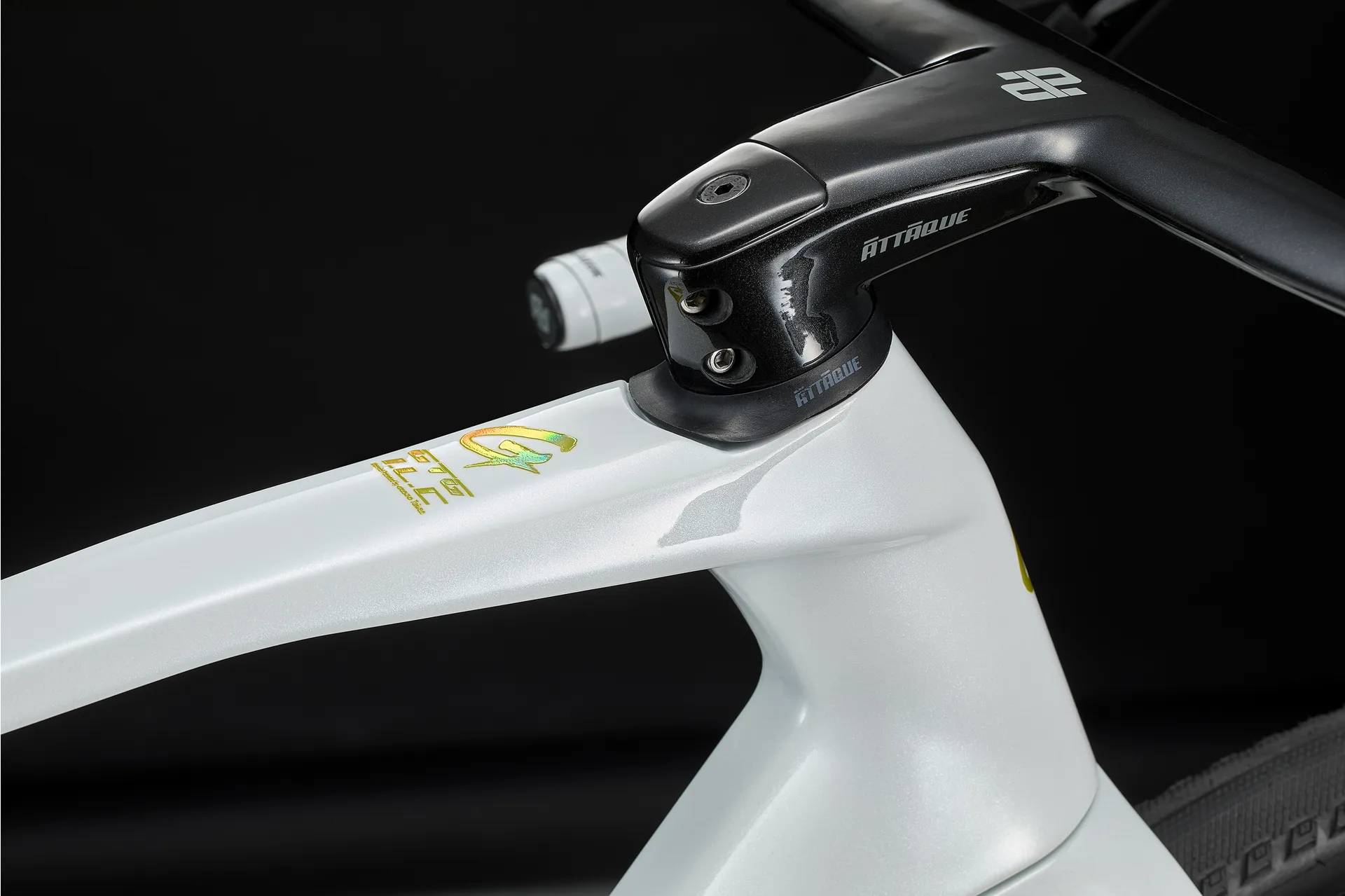
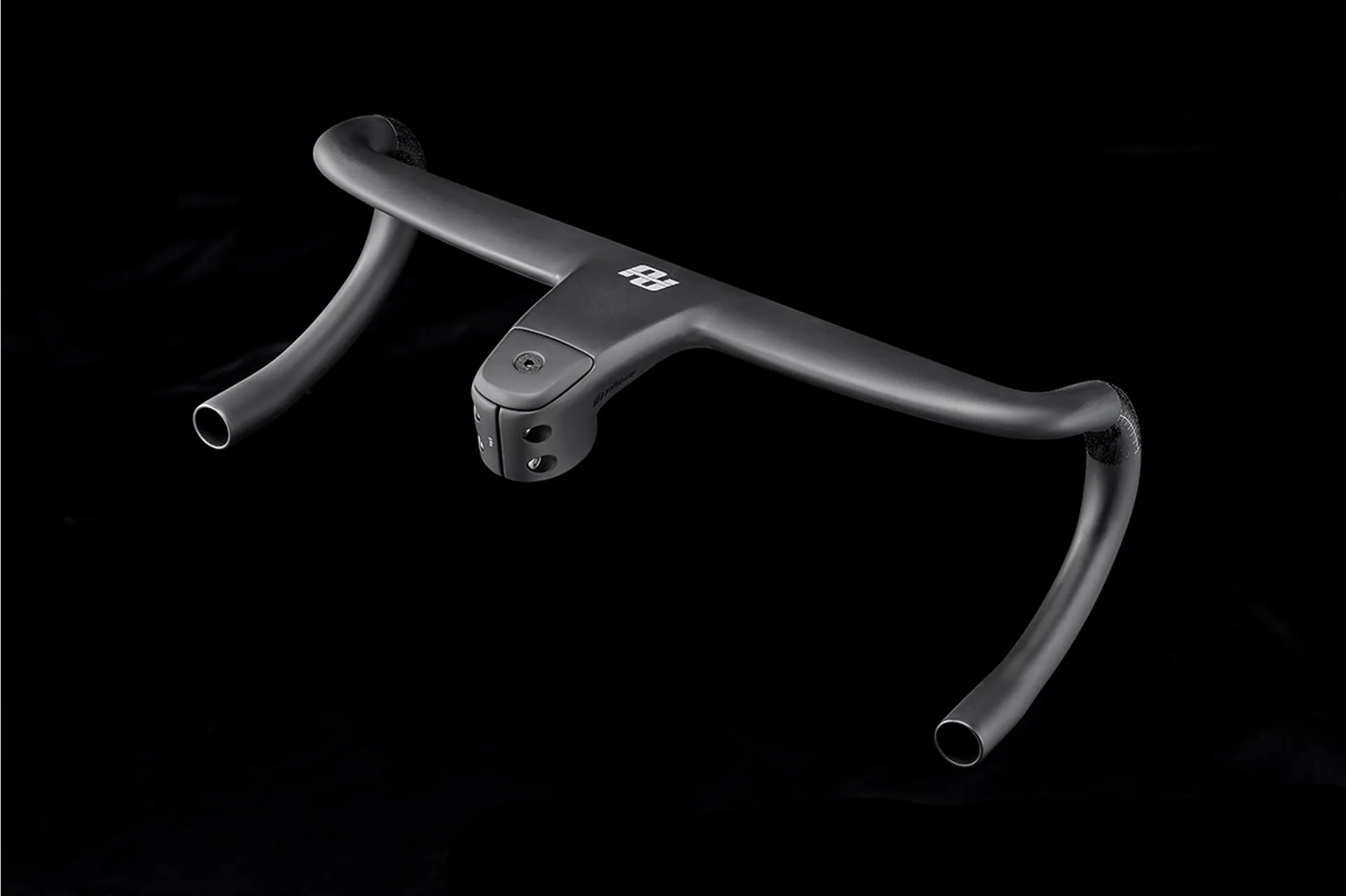
The cockpit is Gusto's own G1, an integrated carbon bar with 15 degrees of outward flare at the drops, internal routing and a carbon computer mount that suits Garmin, Bryton, Wahoo and GoPro fittings. An integrated bar is a commitment, since the width and the stem length are decided when the bike is specified rather than afterwards - and they are fixed by size on the GTG, unlike the GTR. So it's worth establishing if you might need a change before committing.
Wheels are Gusto's own ATTAQUE G100 gravel set: 40mm deep, 27mm internal, 1,360g, straight-pull spokes and a 36-tooth ratchet hub. Those are carbon wheels at a weight most brands charge separately for, and the 27mm internal rim is the right shape for a 45mm tyre to sit square rather than lightbulbing. They are rated for 35 to 52mm tyres, which is wider than the frame will take, so the frame's 50mm is the number that matters.
The paint is the same as the GTR. Gusto call it ANP, Aurora Nano Paint, a multi-layer metallic finish under a dense clearcoat, and they claim better resistance to scratches, stains and corrosion along with 40 per cent brighter colour. The brightness figure is theirs and unverifiable - but it's the resistance claim is the one that counts on a gravel bike, where the down tube takes a sandblasting every ride.
Every GTG frameset is UCI approved and carries a lifetime frameset warranty. The UCI approval matters to anyone whose season involves a commissaire and means precisely nothing on a Sunday morning in the Chilterns, but it does tell you the frame was built to a rigorous standard rather than to a marketing brief.
The GTG Range
The frame, the ATTAQUE G100 wheels, the G1 cockpit, the paint and the warranty are common to all of them. What changes is the groupset and the saddle.
GTG Elite Ultra is the entry, and the only one with two chainrings. Shimano GRX RX610, mechanical, 12-speed, with Shimano's own shift and brake system throughout, and a Prologo Dimension RS saddle. Mechanical gravel groupsets have stopped being the compromise they were five years ago, and a 2x gives closer ratio steps than any 1x can manage, which is the quieter argument for this build rather than simply the price. Gusto's UK list is £2,249 and this makes quite a compelling argumant for a winter road bike OR Gravel bike with the decision resting on tyre choice, and the geometry argumant I made earlier if the GTR doesn't serve. As one that rides a Race Gravel bike as a road bike - I can advocate for the approach with the right frame under you.
GTG Sport TE moves to Shimano GRX717, 1x12 and Di2 electronic shifting, and swaps to a Selle Italia SLR Elite saddle with PU padding and steel rails. Gusto's UK list is £2,949. The £700 step from the Elite Ultra buys electronic shifting and single-ring simplicity, and for riders who spend time in mud, a 1x with no front derailleur to clog is a maintenance decision as much as a performance one.
GTG Pro TE takes it to Shimano GRX825, again 1x12 Di2, on the same Selle Italia saddle. Gusto's UK list is £3,749. The £800 over the Sport TE is a Di2 range step up, so this is the build for riders who want the top GRX group rather than for anyone chasing a transformation in how the bike rides. It rides like a GTG, because it is one.
Colours across the range are Pearl White, Jet Black, Team Gold and Forest Green.
We have one minor point of push back. But it is minor. There is no downtube storage - which as many will know is becoming de-rigeur these days. That said there is ample provision for bags and bolt-on storage, enough that anyone using the GTG for long or multi-day adventures, would not materially benefit from a DT port. The alternate race use-case, is a further argumanet against a fundamental need for a port. And at these prices, can you really gripe?! Find me a cheaper equivalent spec with a downtube port and we can get into it, but I'm comfortable you won't!
The first main drop of UK Stock is due to land sometime between mid December and early January. A select few dealers - like us (ahem) - will have limited stock before that arrives in mid-November.
Get in early and secure stock. These, like the GTR on the road, will not hang around!
Geometry
Five sizes. All figures in millimetres except the angles, which are degrees, and STR, which is the stack-to-reach ratio.