Introducing SEKA
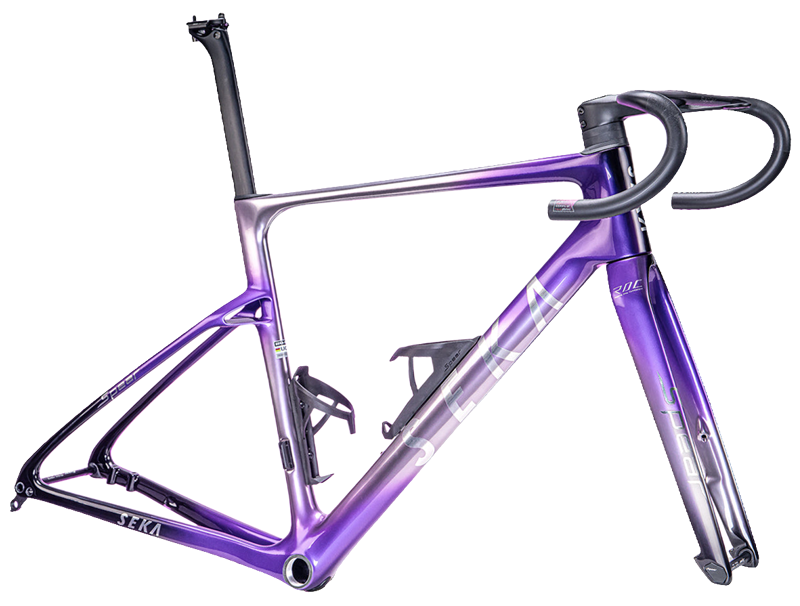
There is a particular kind of conviction to arriving in a crowded market and declaring that you intend to build the fastest all-round road bike on the planet — and then spending years of materials research, wind tunnel sessions and layup iterations to actually do it. SEKA Bikes, founded in Shanghai and rooted in a culture of obsessive engineering, did exactly that. The result is a range of framesets that has quietly accumulated the kind of credibility that most brands spend decades chasing: independent reviews, verified aerodynamic data, and geometry that benchmarks against the Specialized Tarmac SL8 in handling balance.
SEKA stands for four values that sit at the heart of everything the brand makes: Sage, Exceed, Keep, Artist. Sage means rigorously intelligent development — data-led decisions at every stage, no assumptions carried over from one generation to the next. Exceed means setting new benchmarks rather than chasing existing ones, and backing those benchmarks with verifiable evidence. Keep is the discipline to pursue refinement long after a lesser brand would have shipped the product — 37 layup iterations and 30-plus carbon schedule tests are what Keep looks like in practice. And Artist reflects something less common in this space: the belief that a race machine should be genuinely beautiful, that the engineering and the aesthetic should not be in tension with each other but should arrive at the same place together.
The combination of these values has produced a brand that is serious in a way that the cycling industry does not always reward but that riders — and the people who work with them — recognise immediately.
Engineering That Starts With the Material
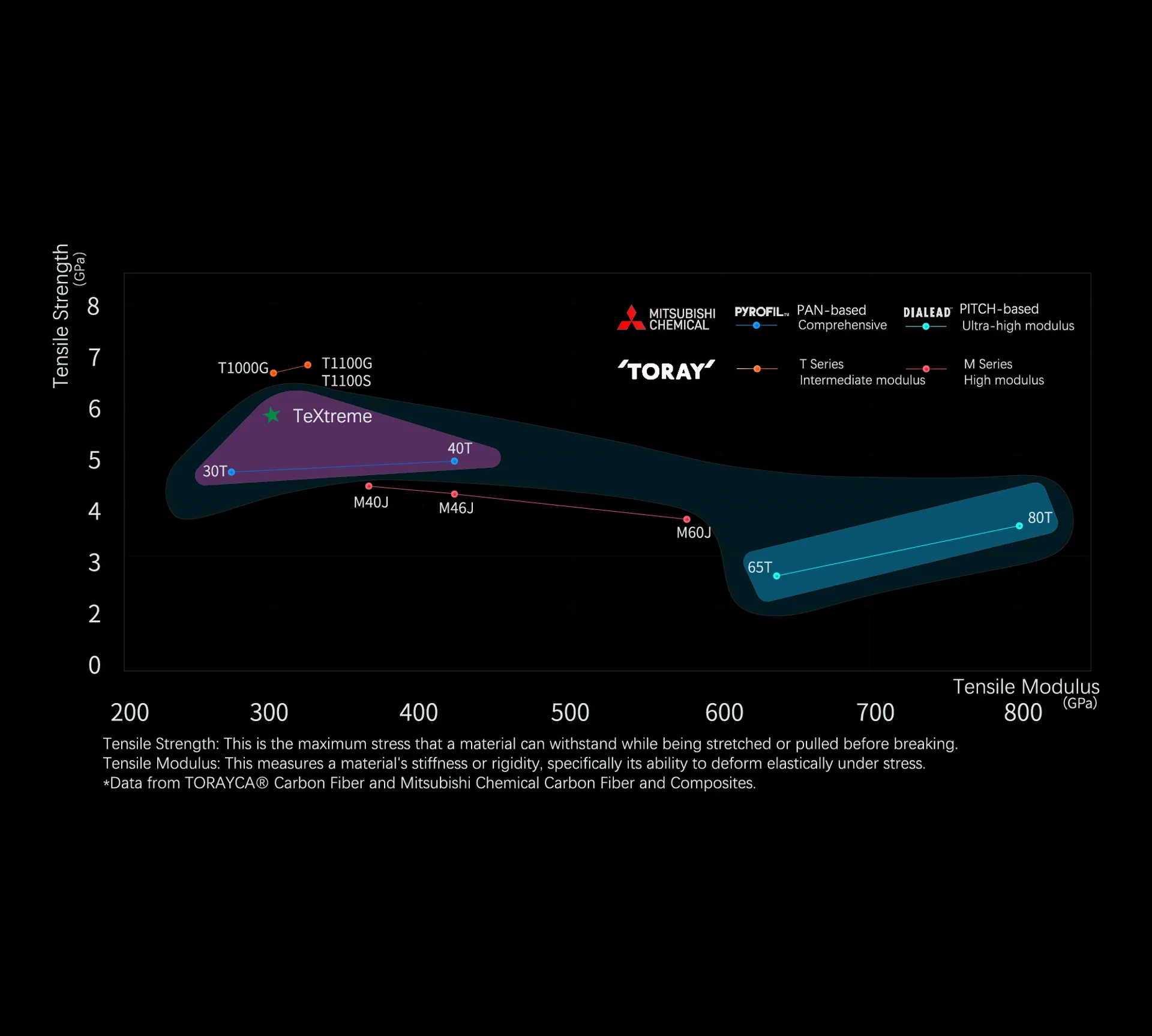
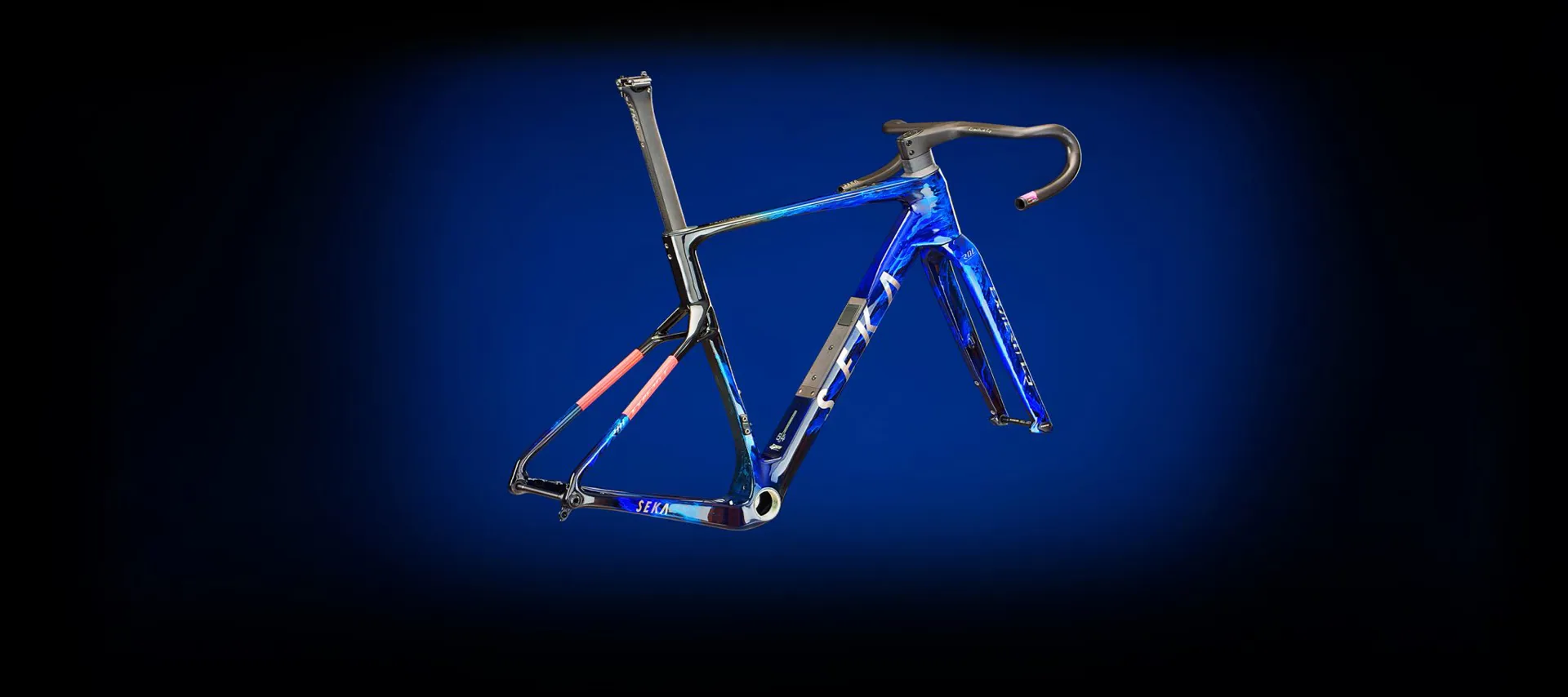
Most brands design a frame and then source carbon to build it from. SEKA's process runs in the opposite direction. They begin with materials science and work outward, selecting carbon grades for their specific mechanical properties and deploying each one only where those properties are needed. The Spear — SEKA's flagship road frameset — uses six distinct carbon fibre grades in a single structure, a level of material complexity that is unusual even among the highest-tier US and European manufacturers.
The foundation of the layup is
TeXtreme, a spread-tow fabric weighing just 20 grams per square metre that delivers exceptional impact resistance and fibre-to-resin uniformity. It costs approximately three times as much as standard T800 carbon, and SEKA uses it because nothing available at a lower price point offers the same combination of weight and long-term structural reliability. Layered in alongside it are two pitch-based ultra-high modulus fibres from Mitsubishi Chemical —
DIALEAD PITCH 65T and
PITCH 80T — materials produced from coal tar pitch rather than the polyacrylonitrile precursor used in conventional aerospace carbon.
The PITCH 65T achieves a modulus 2.1 times that of Toray T1000, one of the most advanced fibres in conventional use; the PITCH 80T achieves 2.5 times the modulus of T1100, Toray's current ceiling. These are materials found in aerospace structures and high-end motorsport applications. Their presence in a road bicycle frame is rare. In the Spear's layup, they are precisely placed to maximise stiffness in the zones where stiffness translates directly into power transfer — without adding a single gram of unnecessary mass.
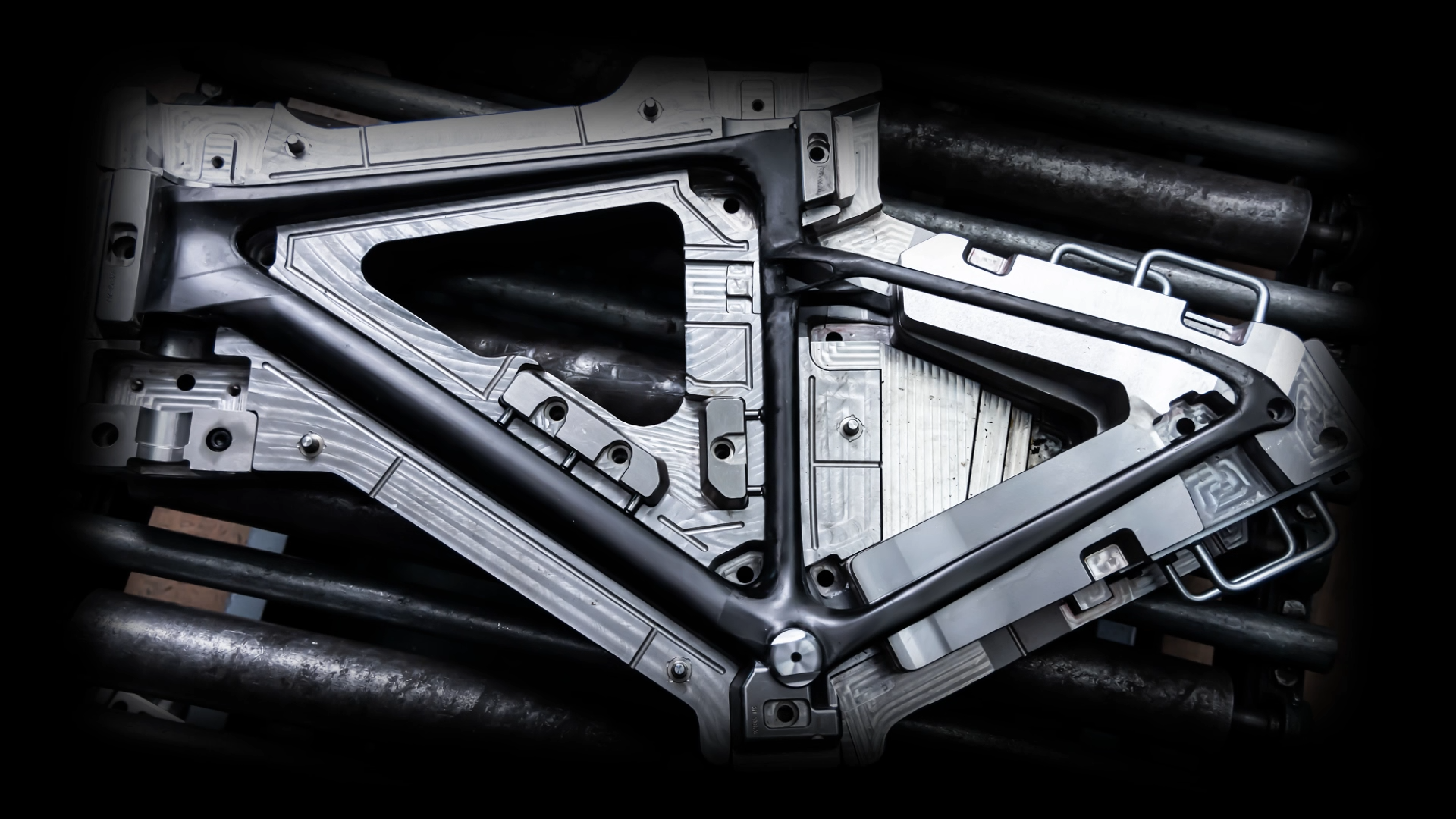
The entire frame is formed using True-One-Piece Moulding, a manufacturing process in which the structure is created from a single mould rather than bonded from separately moulded sections. This eliminates the weight penalty of bonded joints — 25 grams versus equivalent bonded construction — and produces measurable improvements in fatigue strength, yield strength and fracture toughness across every structural axis. For the rider, it means a frame that is simultaneously lighter and more durable than it would be if built the conventional way.
Finally, SEKA introduced PMI (PolyMethyl MethAcrylate) foam filling in specific structural zones of the Spear — a technique borrowed from aerospace panel engineering that increases buckling resistance in thin-walled carbon sections without meaningfully adding mass. This is, to SEKA's knowledge, the first application of PMI foam filling in a production road bicycle frame. The practical benefit is that the carbon walls can be thinner and lighter than would otherwise be structurally viable, without compromising the frame's resistance to the compressive and torsional loads generated in hard riding.
The total carbon schedule for the Spear runs to 350 individual pieces of precisely cut and hand-placed carbon cloth. That is not a round number or a marketing claim — it is the result of 30-plus layup iterations refined over the course of the frame's development, each one adjusting the orientation, weight, and sequence of individual plies until the stiffness, weight and compliance targets were simultaneously achieved.
Tested in the Same Wind Tunnel as Formula One
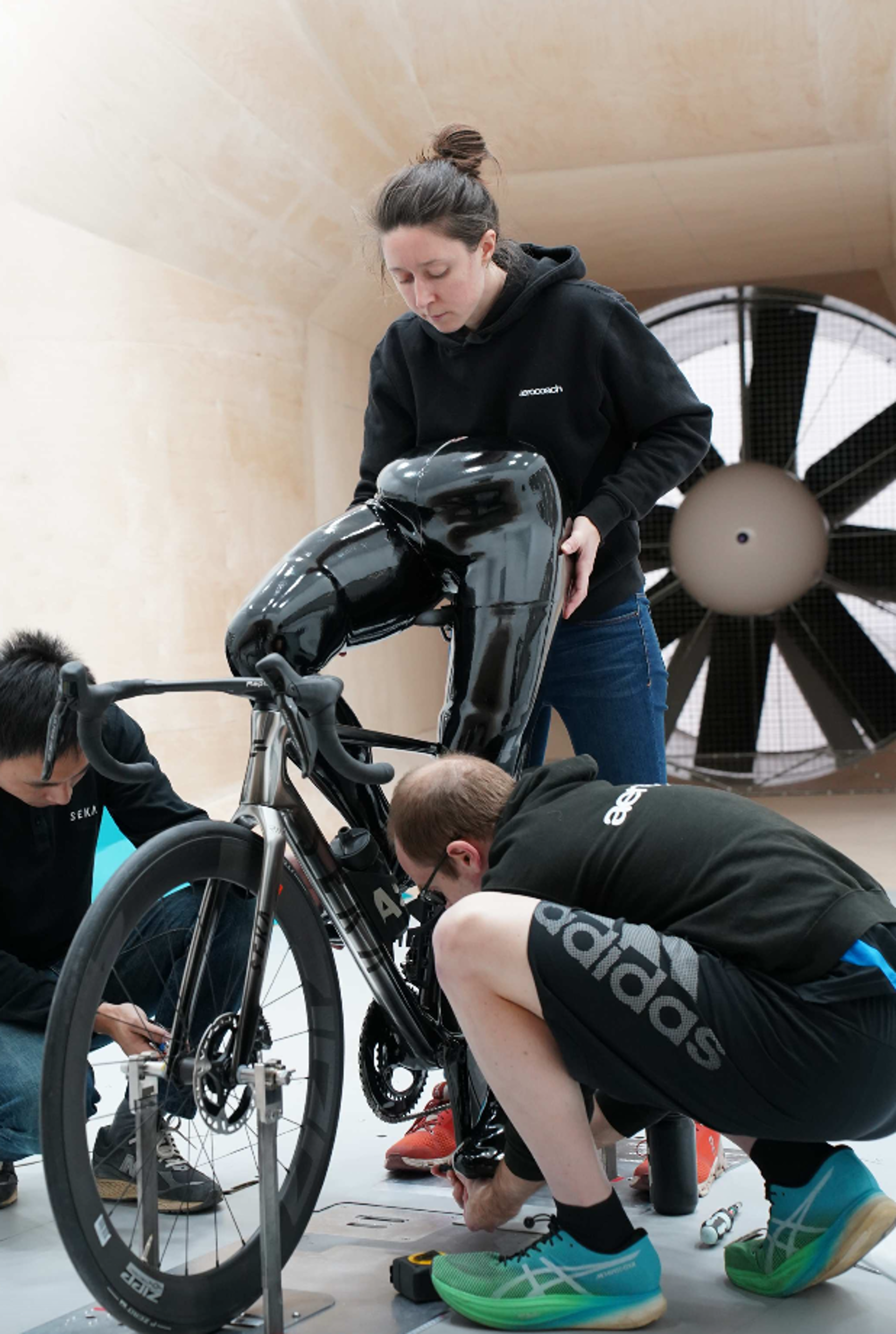
SEKA invested in a collaboration with AeroCoach — aerodynamic specialists whose client list includes WorldTour professional cycling squads — to conduct wind tunnel testing at the Silverstone Sports Engineering Hub (SSEH), a facility whose aerodynamic infrastructure is shared with Formula One teams. Over the course of the Spear's development, more than 280,000 sets of data were generated and analysed, covering yaw angles, rider positions, wheel configurations and component interactions.
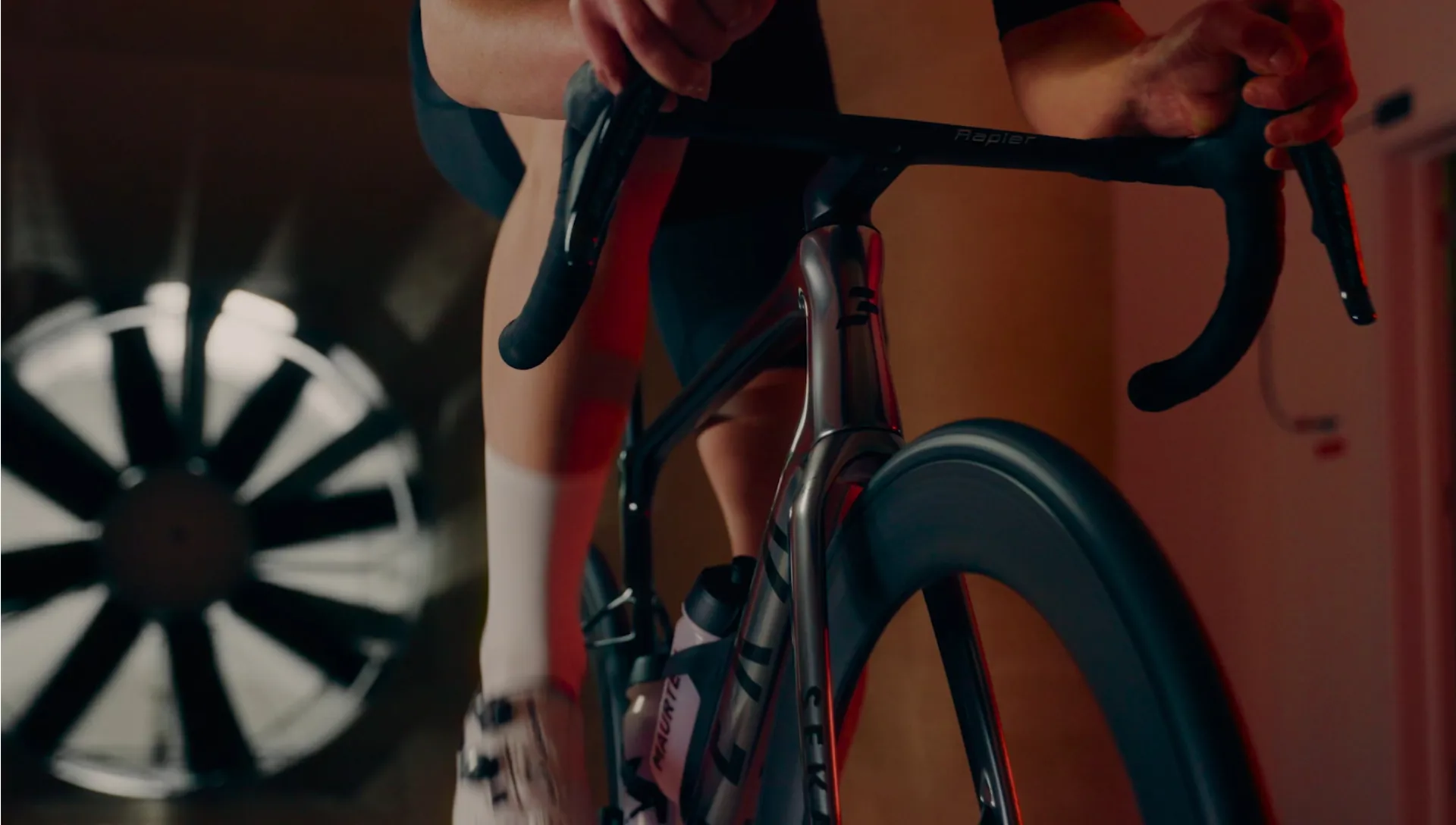
The headline result is a saving of 6 watts of aerodynamic drag at 40km/h compared to the previous-generation Exceed frameset — which itself was no aerodynamic compromise. In a 40-kilometre effort at constant speed, 6 watts translates to 15.27 seconds saved. For context: that margin decides races. These figures are wind-tunnel measurements conducted under standardised conditions, not simulations or extrapolated estimates. When Cyclingnews reviewed the Spear in June 2026, their independent testing confirmed it delivered aerodynamic performance that placed it behind only three dedicated aero road bikes in the entire test field — despite being designed and positioned as a lightweight all-rounder.
The Wind Eye: One Innovation, Two Results
The most visually striking element of any SEKA Spear or ExAero frameset is the
Wind Eye (風眼) — the bifurcated junction where the seatstays meet the seat tube structure. Where a conventional frameset joins both stays at a single point, the Wind Eye opens two distinct apertures in the carbon, reshaping the airflow through the rear of the frame and simultaneously engineering a specific compliance response into the rear end.
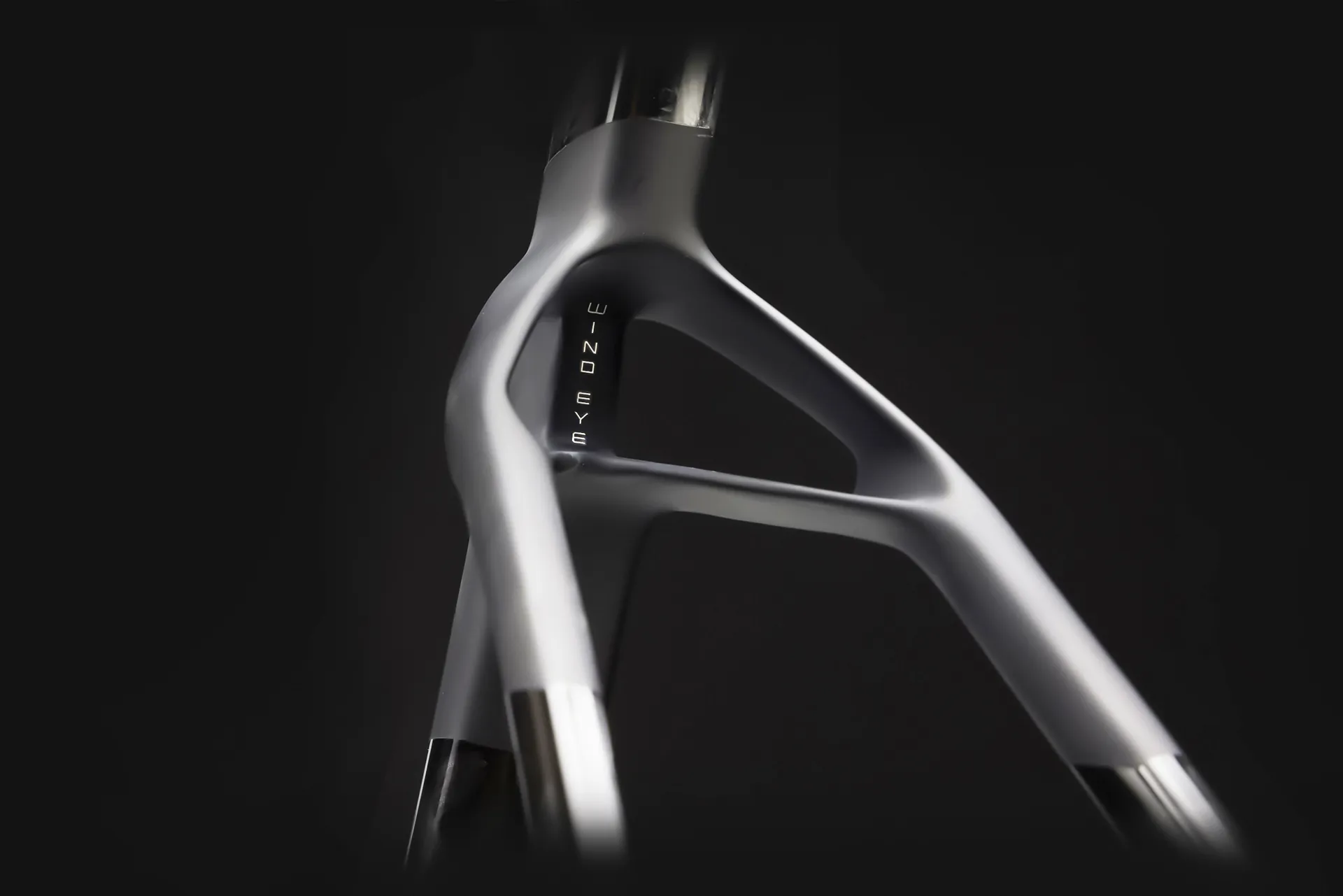
Aerodynamically, the rear triangle of any road bike is a problem zone — the seat tube creates a wake, and the rear wheel pushes turbulent air back into it, compounding drag with every increase in speed. The Wind Eye addresses this directly, reducing the low-pressure turbulent zone between the seat tube and the rear wheel and saving 2.66 watts at 40km/h in isolation. For a feature located at the back of the frame rather than in the aerodynamically dominant front sections, that is a meaningful contribution to the overall 6-watt saving.
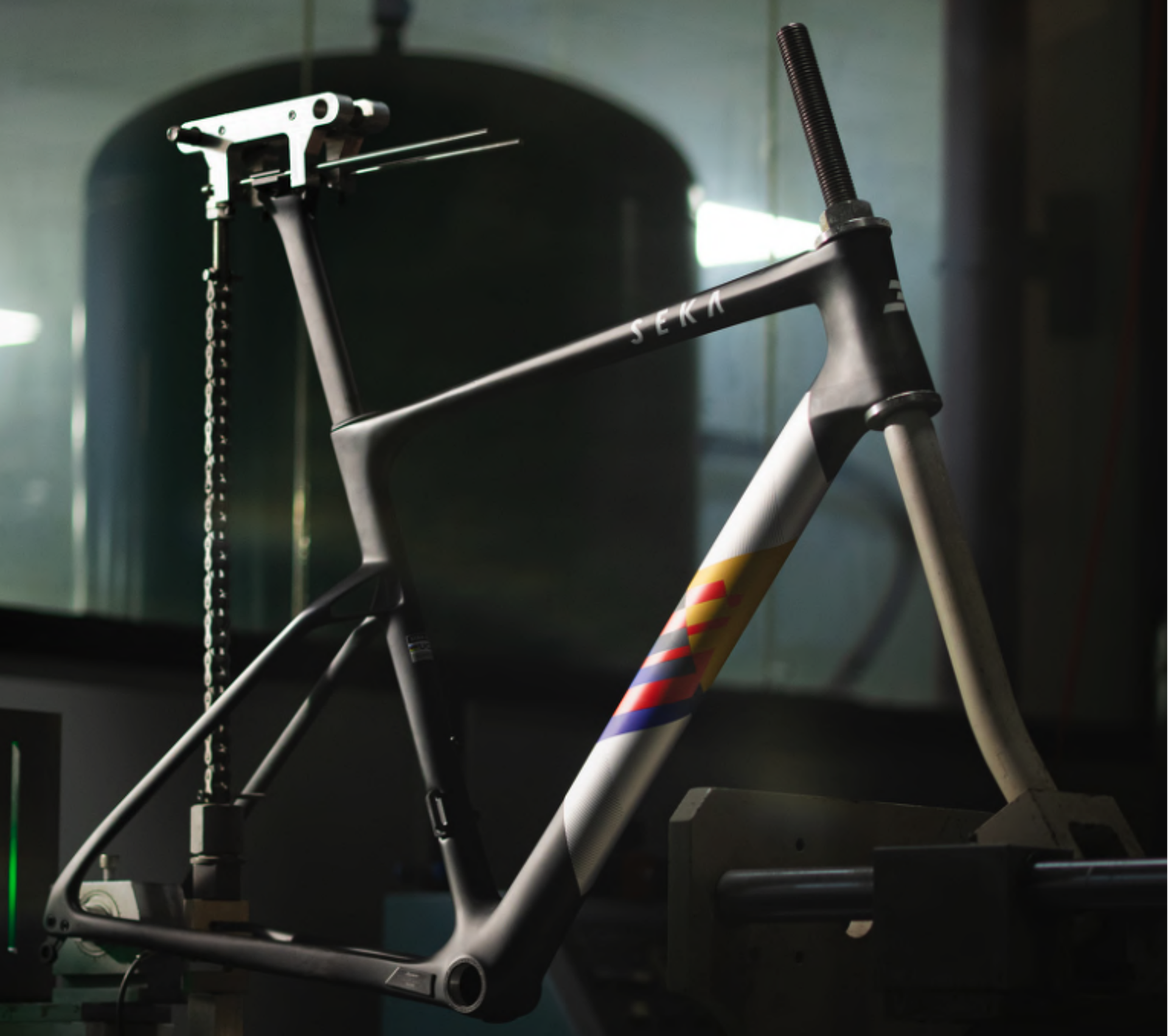
Structurally, the Wind Eye acts as a carefully tuned flex zone in the vertical plane. The design allows the seatpost to deflect up to 17mm under rider load — a 23% improvement in vertical compliance over the previous generation — while lateral and torsional stiffness are maintained for precise, responsive handling. The effect for the rider is a frame that absorbs road surface energy progressively rather than transmitting it directly, particularly on imperfect surfaces or over longer distances. SEKA validated this behaviour through fatigue testing to 150,000 cycles at 144kg load applied 85mm behind seatpost centre — three times the cycle count required by the ISO standard, at a 20% higher load, applied at a 21% greater offset. The Wind Eye is not a compromise between speed and comfort. It is an engineered solution to the fact that the two have never needed to be in opposition.
The Frameset Range
SEKA currently offer two frameset lines for the UK market alongside their proprietary integrated handlebars and accessories.
The
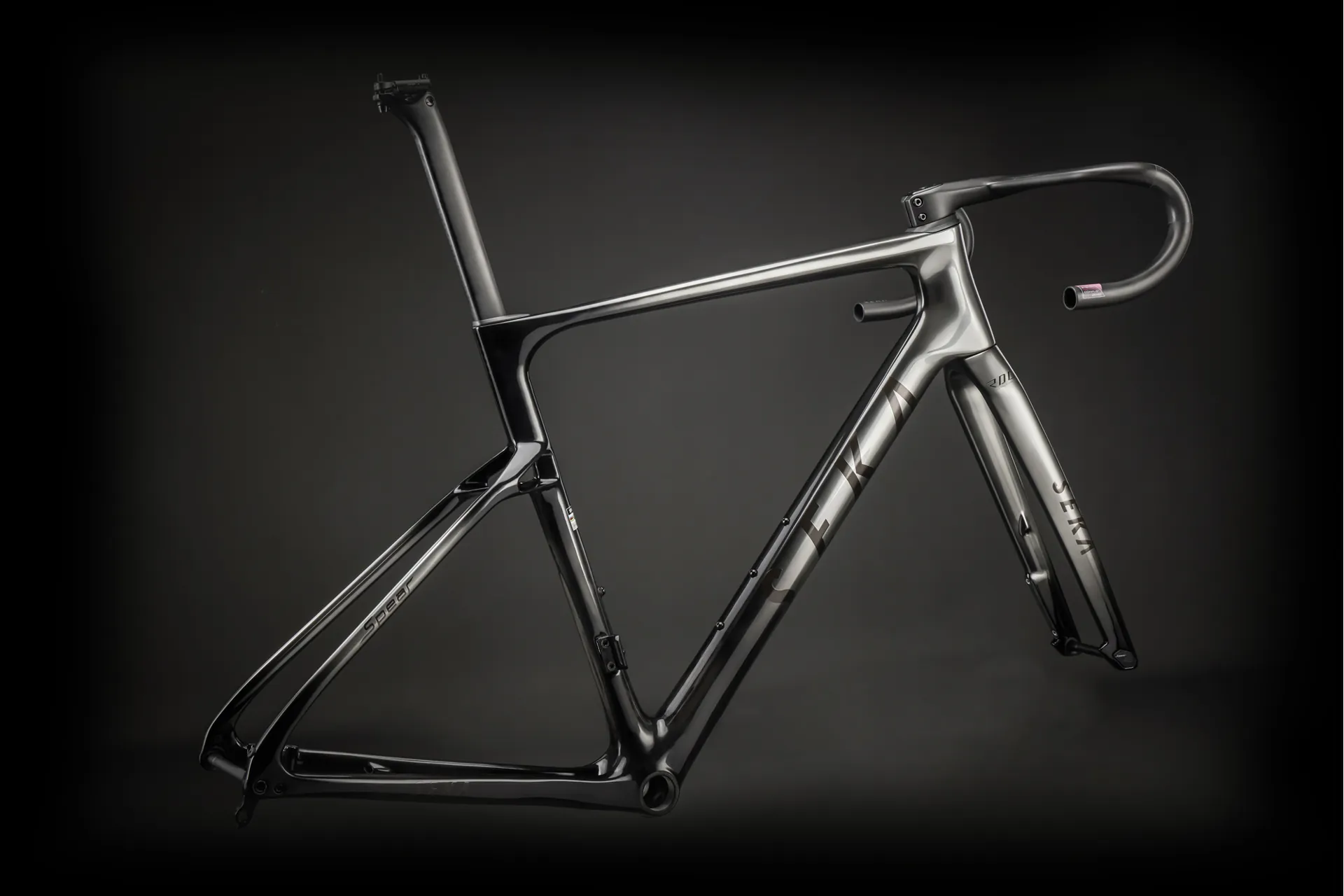
Spear is the flagship road racing frameset and the fullest expression of everything SEKA's engineering team has developed to date. It is available in two carbon specifications — the Spear Standard and the Spear RDC (Racing Day Combatant) — which share the same mould, geometry, Wind Eye structure, True-One-Piece Moulding and included Rapier handlebar, but differ in their carbon fibre schedule. The Standard uses a high-performance layup that delivers the full aerodynamic and structural package of the Spear RDC at a more accessible price point, with a frame weight of 780g in size M unpainted. The RDC pushes the material specification as far as current carbon science allows, deploying a higher proportion of DIALEAD pitch-based ultra-high modulus fibres and additional TeXtreme to achieve a frame weight of 685g in size M unpainted — 95g lighter, 5% stiffer in stiffness testing, and 14.5% better in stiffness-to-weight ratio than the equivalent Exceed RDC. Both come in seven sizes including the MR and LR race geometry options that provide longer reach and lower stack for riders who prefer a more aggressive position without needing a smaller frame.
The ExAero GR takes the core principles of SEKA's engineering approach and applies them to competition-focused gravel riding. It is designed with 56mm front and 52mm rear tyre clearance for real-world versatility across mixed terrain, while maintaining aerodynamic performance that SEKA claim is comparable to a conventional road bike — a claim that reflects the same wind-tunnel development discipline that produced the Spear. The ExAero GR is paired with the Gladius GR integrated handlebar and is available in six frame sizes, with geometry calibrated for a trail figure of 71–60mm across the range — a specification that balances direct, agile steering response with the stability required at speed on loose or rough ground. Integrated internal storage and modular mounting interfaces are built into the frame, allowing riders to carry what they need without compromising the aerodynamic profile.
Integrated Handlebars: Engineered as Part of the Platform
SEKA's approach to handlebars reflects the same conviction that runs through every other part of their development process: a component designed in isolation from the frame it connects to is a component that falls short of its potential. Both frameset lines carry a purpose-built integrated handlebar developed alongside them, and in both cases the bar is not an afterthought or a bolt-on — it is a structural and aerodynamic extension of the frame itself.
The
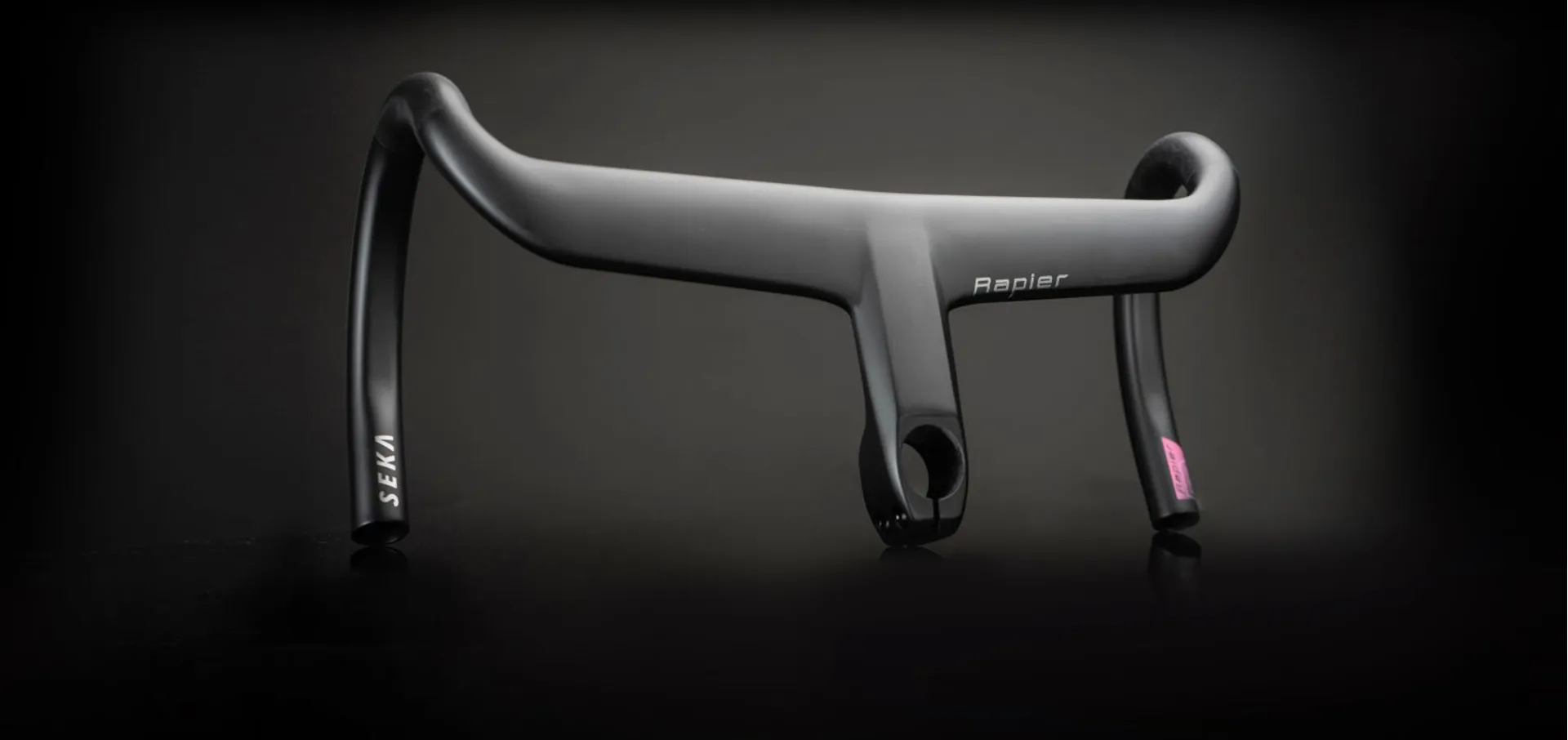
Rapier, paired with the Spear, is a road-optimised integrated bar produced using the same True-One-Piece Moulding process as the frame and tested in the same wind tunnel. Its cross-section narrows to just 16mm at the thinnest point, making it one of the most aerodynamically slender integrated bars in production, and the lower drops carry a flared grip section for a more secure hold in the descending and sprinting position. Nineteen size combinations across widths from 360mm to 415mm (at the hoods, with 25mm additional width at the drop) and stem lengths from 80mm to 130mm mean that the Rapier can place the vast majority of riders in a correct, aerodynamically optimal position without requiring custom parts or compromises. Computer, camera and light mounts are integrated into the bar structure, and titanium stem bolts are included.
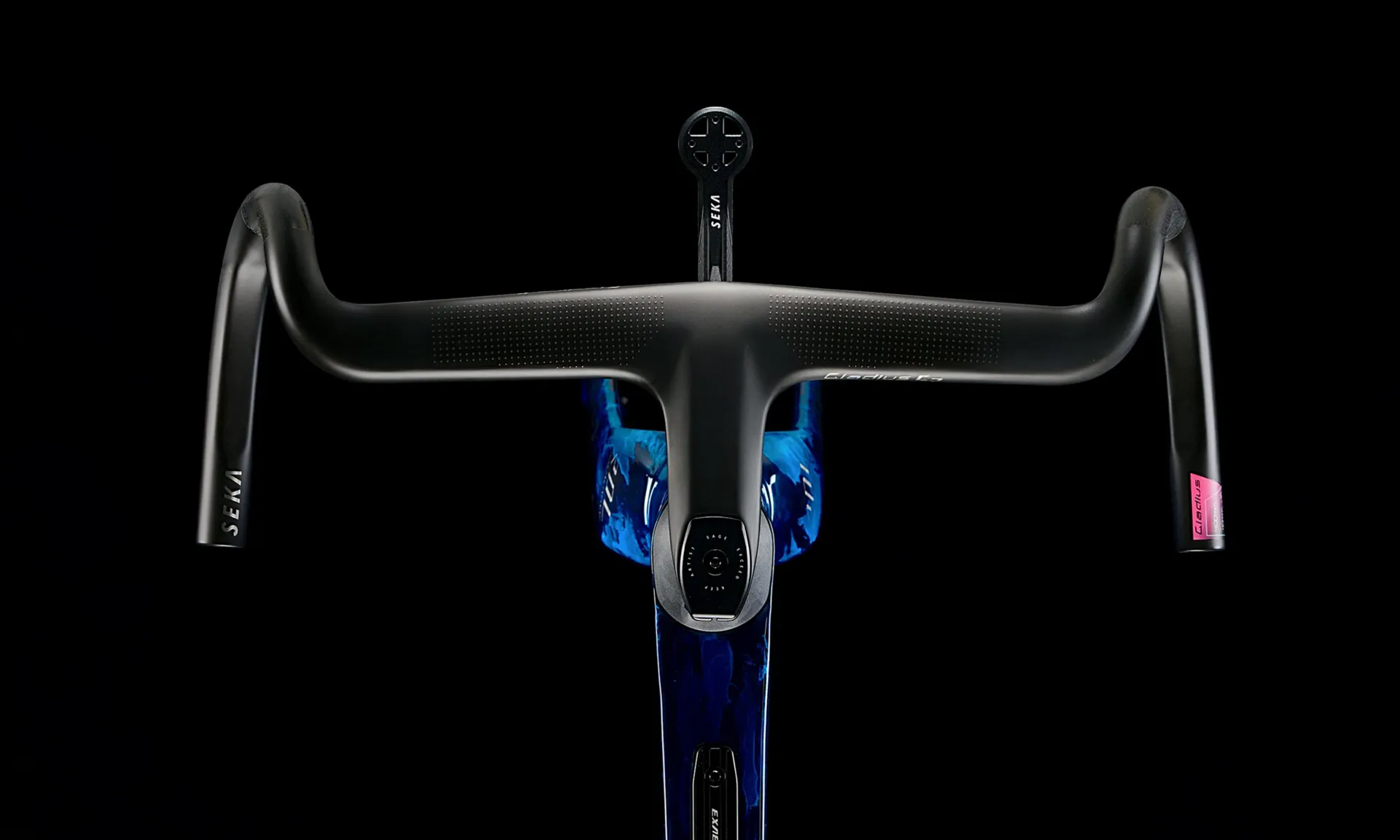
The Gladius GR, developed for the ExAero GR, takes the same integrated design philosophy and reinterprets it for the realities of competitive gravel riding. The bar offers 15 size combinations across three widths and five stem lengths, with a 16° outward flare on each side of the drops that broadens the lower grip position for improved wrist ergonomics and mechanical control on technical terrain. A slight backsweep in the upper section increases forward reach space for riders shifting position on climbs, and the tops feature a micro-textured anti-slip surface that maintains grip in wet or muddy conditions. Where the Rapier is designed to minimise the rider's aerodynamic signature in a road racing tuck, the Gladius GR is designed to keep a rider in confident, secure control when the road surface underneath them is actively working against that.
Across both bars, the underlying principle is the same: the handlebar is part of the system, not a variable to be swapped out. Both are included with their respective framesets.
Why SEKA at 7hundred?
The performance-per-pound proposition that SEKA offers is genuinely unusual in today's market and worth understanding clearly. A Spear RDC frameset at 685g — with class-leading aerodynamics backed by 280,000 wind-tunnel data points, six-grade carbon construction including pitch-based ultra-high modulus fibres, True-One-Piece Moulding, Wind Eye compliance engineering, and the Rapier integrated handlebar included — is available at a price that sits significantly below US / European equivalents with comparable or lesser headline specifications.
When built with a premium groupset and a set of deep-section carbon wheels, the complete bike competes directly on performance metrics with machines from the top names in the sport that command a substantial premium.
That gap is not a function of lower quality or reduced ambition. It is a function of SEKA's position in a manufacturing environment where the world's most advanced carbon fibre production infrastructure happens to be located, combined with the brand's decision to invest in verifiable data rather than marketing heritage. The result is a brand that arrived with evidence and has continued to build on it.
At 7hundred we stock SEKA because we believe our customers deserve access to engineering that has genuinely earned its place at the table — and because a complete race bike built around a Spear RDC frameset represents, in our view, one of the most compelling performance-to-value propositions currently available in road cycling.
All Spear frames and carbon parts are backed by a limited warranty against manufacturing defects. Geometry independently verified to align closely with the Specialized Tarmac SL8 as a handling reference. Wind tunnel data obtained at Silverstone Sports Engineering Hub in collaboration with AeroCoach. Cyclingnews review published June 2026.