Racing Deconstructed
SEKA open the ExAero material with a statement that reads more like an engineering constraint than a marketing line: racing is never a contest of a single performance metric. The lowest drag figure does not make every sprint quicker. The lightest frame does not make every pedal stroke crisper. And the stiffest structure in a test rig does not keep a rider composed and in control after a hundred kilometres. Aerodynamics, weight, stiffness, handling and compliance are intrinsically linked, and pushing any one of them to its extreme means something else pays for it.
That is a more honest starting point than most aero bikes get, and it explains why the ExAero looks the way it does. This is not a frameset designed to top any single line on a spec sheet. It is designed so that every number pulls in the same direction, toward the only thing that actually decides how fast a rider goes: system efficiency. Understanding that intent makes several of the ExAero's more counter-intuitive decisions read as deliberate rather than compromised — starting with the fact that it is a physically bigger bike at the front end than the Spear, and faster because of it.
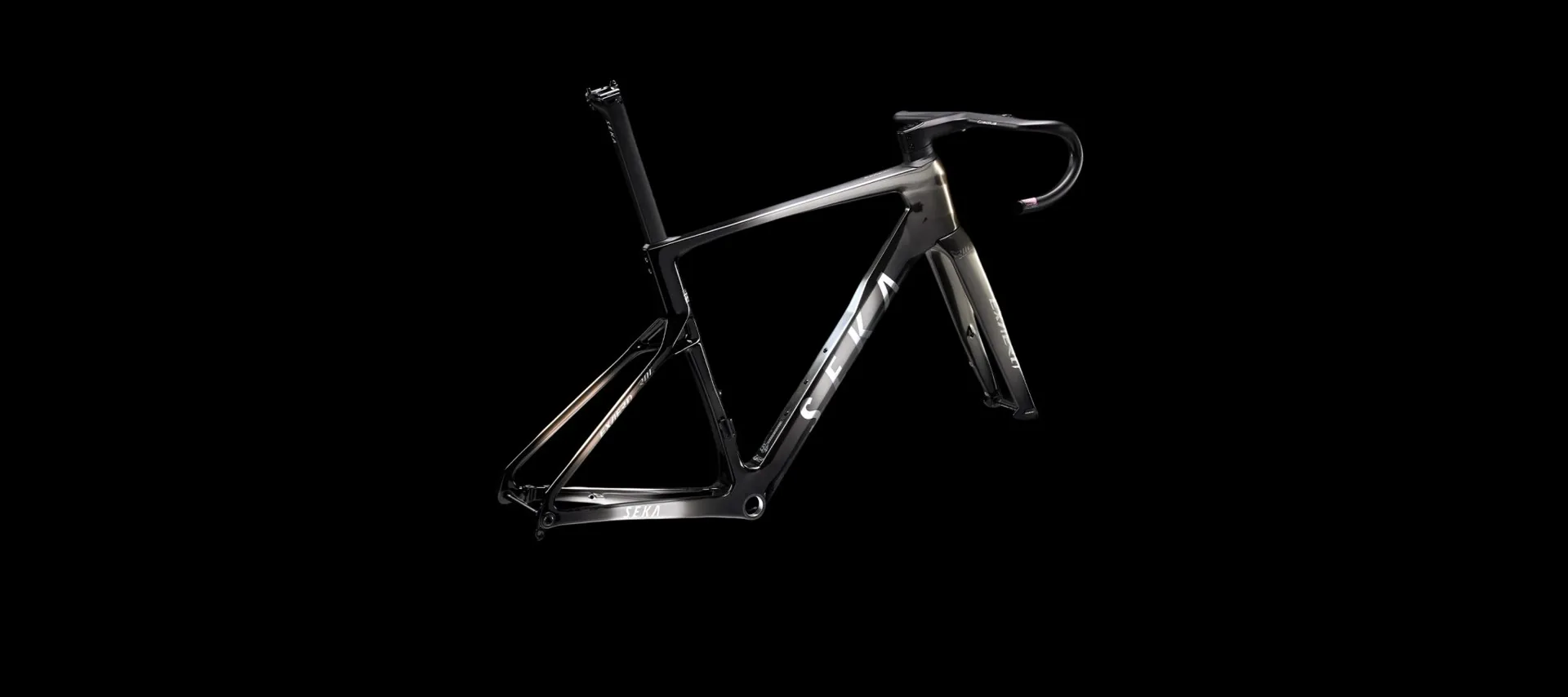
Tested as a System
Most aerodynamic claims in cycling are component claims dressed up as bike claims. A frame is measured on its own, a handlebar on its own, and the numbers are added together as though airflow respects the boundary between them. It does not. Air leaving a fork crown arrives at a down tube; air leaving a down tube arrives at a bottle; air leaving a bottle arrives at a rider's legs. Each interaction changes the next.
SEKA's development programme with AeroCoach was structured to account for exactly that. Rather than testing components in isolation, the frame, handlebar assembly, water bottle and rider were progressively integrated — one variable at a time, each addition measured against the last — culminating in a final validation of the complete rider–bike system. Three full phases of wind tunnel testing were completed, running from CFD validation of the base frame, through the integration of the MAG aero bottle system, to full performance verification of the configuration running the Gladius ALTA riser handlebar.
The practical value of this for a rider is that the headline figure quoted for the ExAero is not a laboratory abstraction assembled from parts. It is the measured performance of the bike as it is actually ridden, at 45km/h, with a rider on it and bottles in the cages.
Greater Frontal Area, Lower CdA
The instinct in aero frame design is to make everything narrower. Reduce frontal area and you reduce drag — it is the most intuitive relationship in the discipline, and it is the reason a generation of aero bikes arrived with tube sections so compressed they had to be reinforced from the inside.
That reinforcement is where the logic breaks down. Over-compress a critical cross-section and it loses the structural depth it needs to resist pedalling and steering loads. The only way to recover the stiffness is to add material back in, and the rider pays for it twice: once in weight, and again in the dead, unresponsive feel of a frame carrying carbon that exists purely to compensate for its own shape.
SEKA went the other way. The ExAero retains effective cross-sections in the load-bearing zones — the head tube, fork crown, down tube and bottom bracket area keep the structural depth they need — and the aerodynamic work is done by coordinating the shaping of those sections and the handlebar assembly so that the front-end airflow is reorganised rather than merely squeezed.
The consequence is measurable and, on paper, looks like a step backwards:
| Component | ExAero | Spear | Difference |
|---|
| Frame | 37,973.8 mm² | 36,623.6 mm² | +1,350.2 mm² (+3.69%) |
| Fork (incl. 185mm steerer) | 17,089.7 mm² | 16,326.0 mm² | +763.7 mm² (+4.68%) |
| Handlebar | 14,169.3 mm² | 14,034.4 mm² | +134.9 mm² (+0.96%) |
| Total system | 61,948.7 mm² | 59,493.5 mm² | +2,455.2 mm² (+4.13%) |
The ExAero presents roughly 4.13% more frontal area to the wind than the Spear, and its system CdA still falls. Drag is a product of frontal area and drag coefficient, and the ExAero trades a small, quantified increase in the former for a larger reduction in the latter. The rider gets the aerodynamic benefit without the structural bill — full-size load paths, no compensating material, and a frame that stays responsive under power.
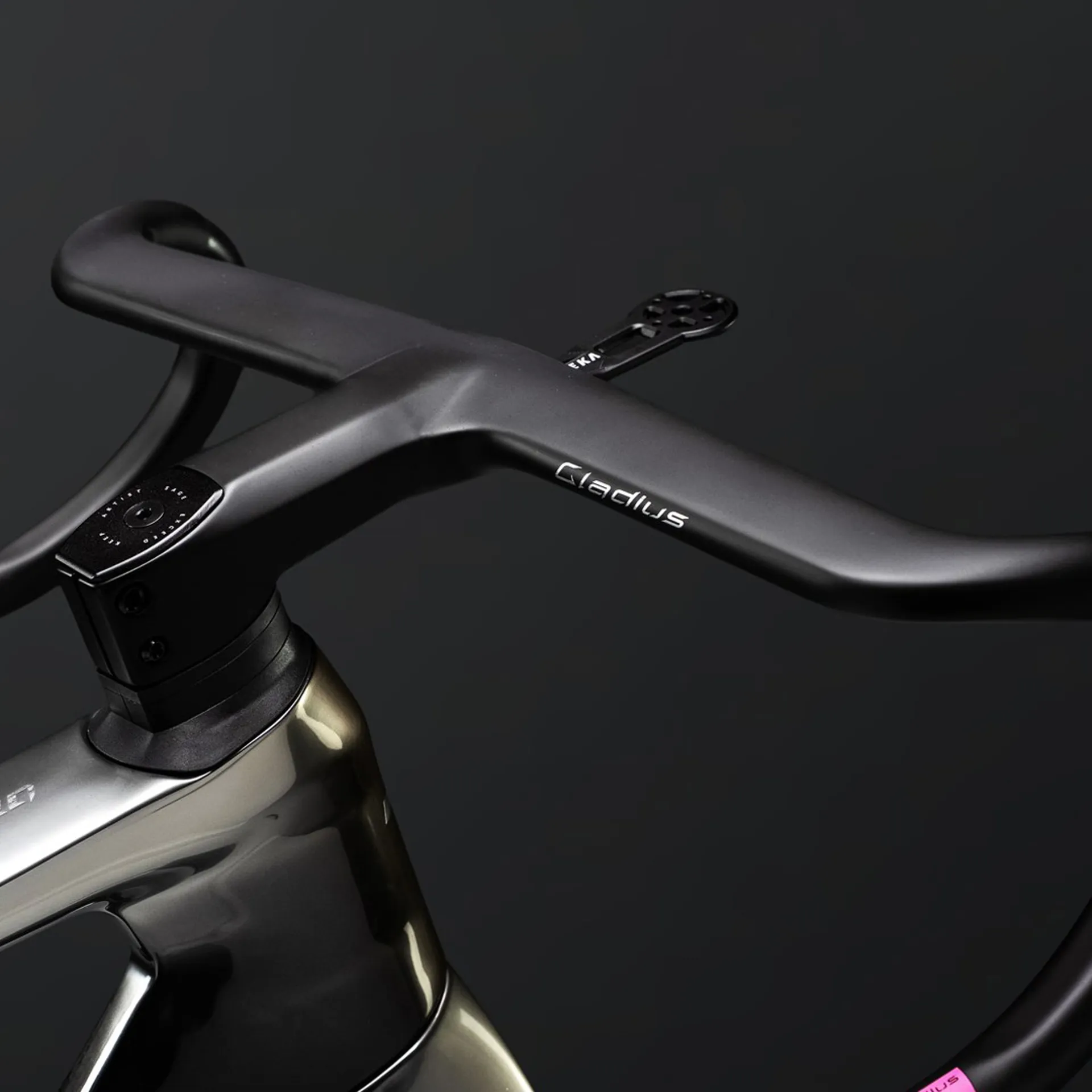
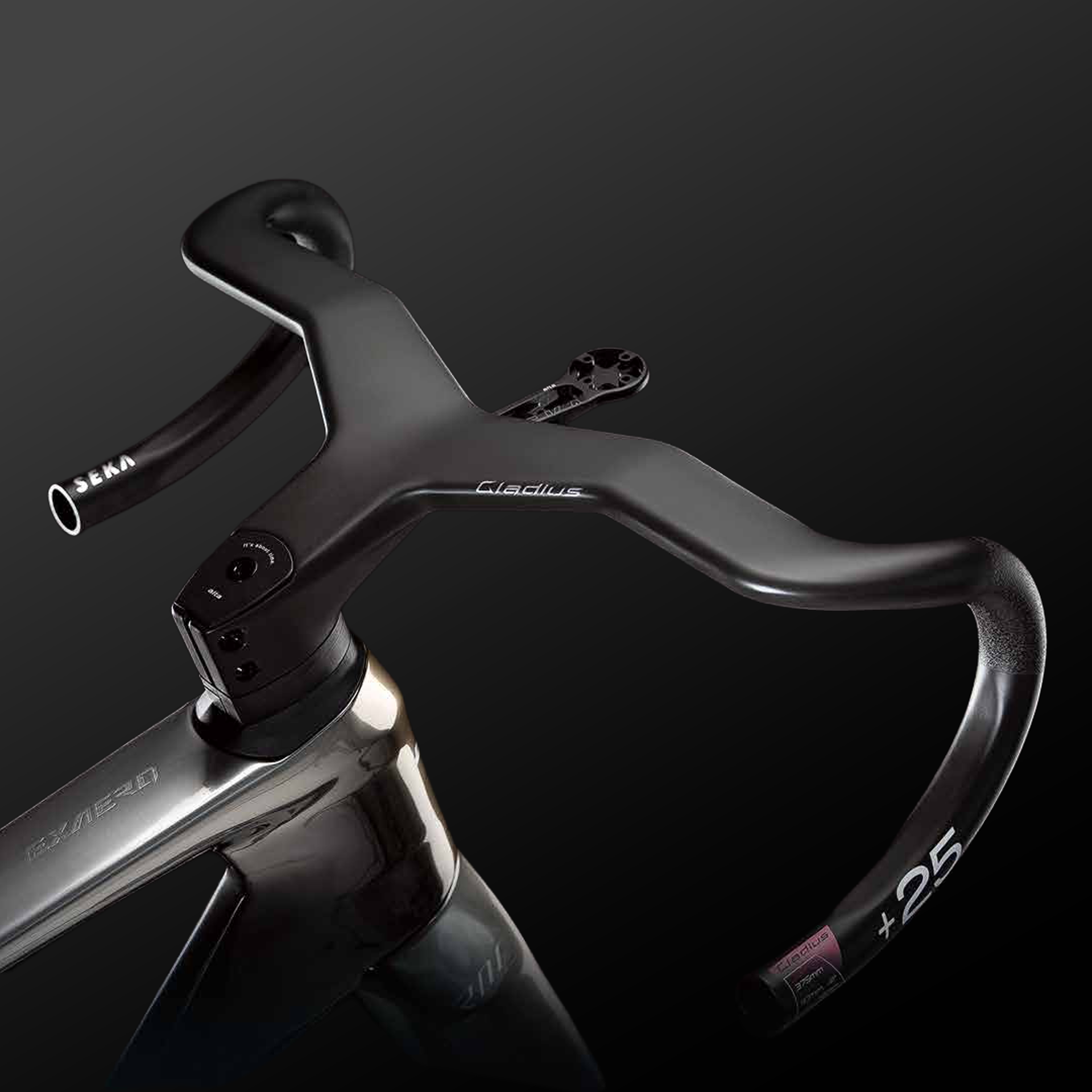
The Gladius Cockpit, and Why the ALTA Matters
The Gladius is offered in two versions: standard, and the ALTA riser. Both are produced with full one-piece moulding. The ALTA raises stack by 25mm while holding reach exactly constant.
At first glance that sounds like a fit accessory — a way to sit up slightly. In the context of the ExAero it is an aerodynamic component, and the reasoning is worth following.
A rider's position is defined by where the hands, hips and feet sit in space. Reaching that position on a larger frame with a low cockpit and reaching it on a smaller frame with a riser cockpit produce the same contact points, but not the same bike. The smaller frame has less tube in the airstream, a shorter head tube and a tighter cockpit stack — a genuinely smaller object moving through the air. The ALTA exists to make that substitution possible without asking the rider to change anything about how they sit on the bike.
SEKA quantify it. An ExAero in size 52 with the ALTA fitted saves 6.14W over the Spear, running conventional round bottles at 45km/h — a saving that comes from the frame-and-cockpit configuration alone, before any bottle optimisation.
| Gladius (375×100) | Gladius ALTA (375×100) |
|---|
| Weight | 320g | 335g |
| Reach | 76mm | 76mm |
| Drop | 128mm | 128mm |
| Stack | Standard | +25mm |
Weights exclude paint and hardware.
Nineteen size combinations are available: stem lengths from 80mm to 140mm, paired with hoods/drops widths of 355/400, 375/420 and 395/440mm. That spread means the sizing-down strategy is available to riders across a wide range of proportions rather than only those who happen to sit between two frame sizes.
Every ExAero frameset sold in the UK is supplied with the ALTA cockpit. The riser configuration is the standard specification here, not an upgrade — the 6.14W figure applies to the bike as we sell it.
One practical caveat SEKA are careful to state, and we will repeat: the final configuration should still be assessed against frame size and the risk of toe overlap. Sizing down is an aerodynamic strategy, not an automatic recommendation, and it is worth a fit conversation before deciding.
ExAero MAG: Treating the Bottle as Part of the Bike
Bottles are the most commonly ignored aerodynamic component on a road bike, which is odd given that almost every rider fits two of them and they sit in the dirtiest airflow on the frame.
The MAG system addresses the region where the front-wheel wake transitions into the down tube and seat tube zones. A conventional round bottle is simply attached to the frame at that point — it is an obstacle placed into disturbed air. The MAG is shaped to actively guide and condition the airflow through that area, which means it contributes to the frame's aerodynamic behaviour rather than degrading it.
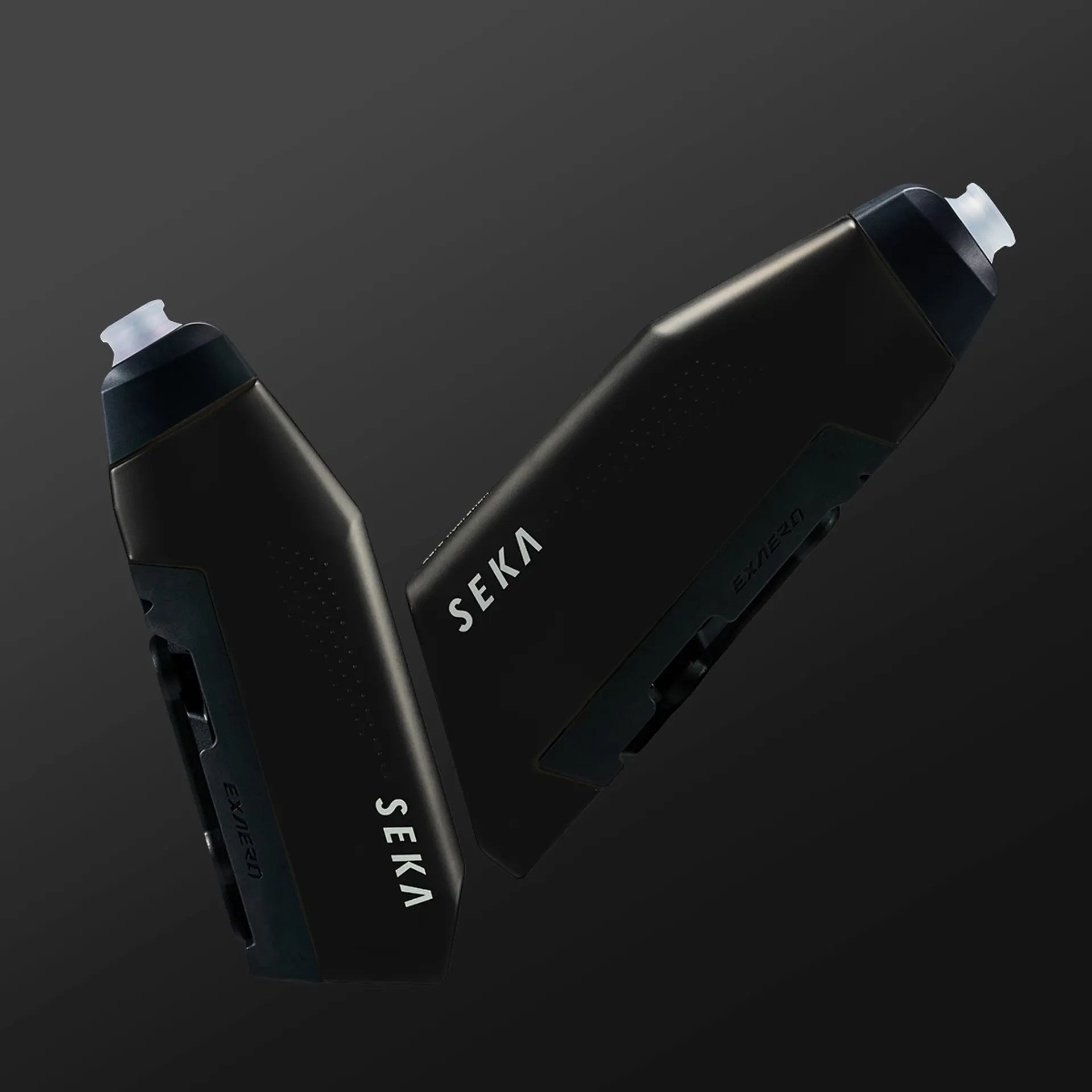
Measured against two conventional 74mm round bottles, the dual MAG system reduces weighted CdA by 0.0047 m² — approximately 5.49W at 45km/h. For a component most riders treat as an afterthought, that is a substantial return.
The ExAero MAG bottle system is sold separately and is not included with the frameset.
The Numbers, Stacked
The two optimisation pathways — cleaning up the airflow around the bike, then reconfiguring the rider–bike interface — are designed to be additive, and SEKA validated them together rather than assuming they would combine cleanly.
Taking the frame and cockpit first: an ExAero with the standard Gladius and dual MAG bottles, measured against a Spear with aero bottle cages and standard round bottles, returns a weighted CdA reduction of 0.00314 m², or roughly 3.68W.
Bring the ALTA into the system and let the rider size down, and the picture changes:
| Configuration | Saving |
|---|
| ExAero size 52 + ALTA (dual round bottles, vs. Spear) | 6.14W |
| ExAero size 52 + ALTA with dual MAG bottles (vs. Spear with round bottles) | 5.49W |
| Complete system | 11.63W |
The complete ExAero rider–bike system delivers a 0.00992 m² reduction in weighted CdA, equivalent to 11.63W at 45km/h. That is the figure that matters, because it is the only one measured on a complete, ridden bike.
All wind tunnel testing conducted at 45km/h. Full methodology and parameter settings are published in the ExAero White Paper.
Weight in Check, Stiffness Uncompromised
Creating a super lightweight bike is easy - it always has been - if you are willing to weaken critical sections. It is also pointless — the frame simply trades weight for responsiveness, and the rider feels the loss every time they put power down or throw it into a corner.
The ExAero's approach is to keep the load-bearing structures intact and vary the material rather than the geometry, applying different carbon grades and targeted layup schedules so that each gram sits where it is actually doing work.
| Frameset | Frame weight (size 54, unpainted) |
|---|
| ExAero RDC | 820g |
| ExAero | 935g |
The two share the mould, the geometry, the WindEye structure and the one-piece moulding process. The 115g between them is a function of the carbon schedule — the RDC carries the more aggressive material specification in the zones where stiffness-to-weight is most performance-critical.
T1100 and M46J: Material Choice with Intent
The layup pairs Toray T1100 with M46J high-modulus carbon fibre, and the division of labour between them is the point.
T1100 has exceptional tensile strength, which makes it the right material for the high-stress zones — the bottom bracket, head tube junction and the areas that absorb peak pedalling and braking loads. M46J is a high-modulus fibre: it resists deformation rather than failure, so it is deployed where the priority is holding shape under load rather than surviving a peak force.
SEKA are explicit that the material grades are not themselves the objective. The objective is using less material to build more effective support — and the results show what that buys:
| Composite lateral stiffness index | ExAero | Spear | Change |
|---|
| Front-end | 189 | 156 | +21.2% |
| Rear-end | 227 | 211 | +7.6% |
| Overall torsional stiffness | 416 | 367 | +13.4% |
The front-end figure is the one to pay attention to. A 21.2% increase in front-end lateral stiffness translates directly into steering precision — how accurately the bike goes where it is pointed when a rider is out of the saddle, cornering hard, or holding a line in a bunch at speed. Combined with the 13.4% torsional gain, the ExAero should feel noticeably more direct than the Spear under load.
WindEye: Stiffness and Compliance From One Structure
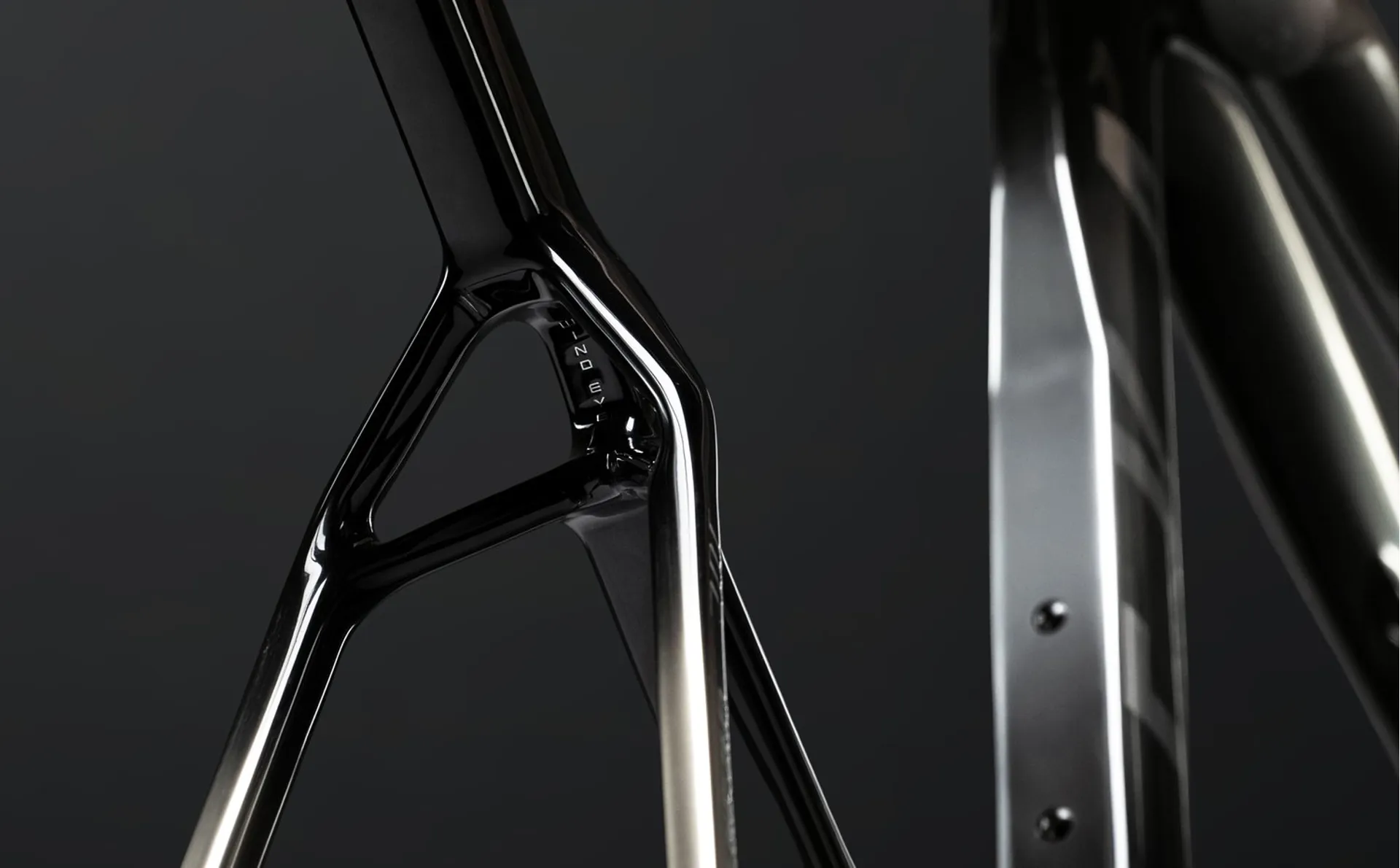
The WindEye — SEKA's bifurcated seatstay junction, carried across from the Spear and ExAero GR — is the clearest illustration of the ExAero's whole design argument, because it delivers three things that normally trade against each other.
The open configuration provides lateral support during pedalling, which is what keeps the rear end from washing out under power. At the same time it retains controlled deformation when absorbing road impacts, so the frame gives vertically where it should. And it conditions the airflow between the seat tube and the rear wheel — the most turbulent region on any road bike, where the seat tube's wake and the rear wheel's disturbed air compound each other.
Vertical compliance is quoted at 106 N/mm, matching the Spear. That figure is worth reading alongside the stiffness table above: the ExAero adds 7.6% rear-end lateral stiffness without giving up any of the Spear's vertical give. More stable power delivery, the same composure over rough surfaces, and cleaner airflow through the rear triangle — from one structure.
Full One-Piece Moulding
Segmented frame construction — moulding tube sections separately and bonding them together — is the conventional approach, and it works. But every bonded joint is a discontinuity in what should be an uninterrupted load path, and pedalling forces have to re-route through an adhesive interface rather than travelling through continuous fibre.
The ExAero, like the Spear is produced with full one-piece moulding, with carbon fibres running continuously across the head tube, bottom bracket and rear junctions. Splices and adhesives are eliminated precisely where the loads are highest. For the rider, the benefit is felt rather than measured: a structural response that is more direct and more complete, because nothing in the load path is asking the force to change materials on its way through.
UDH
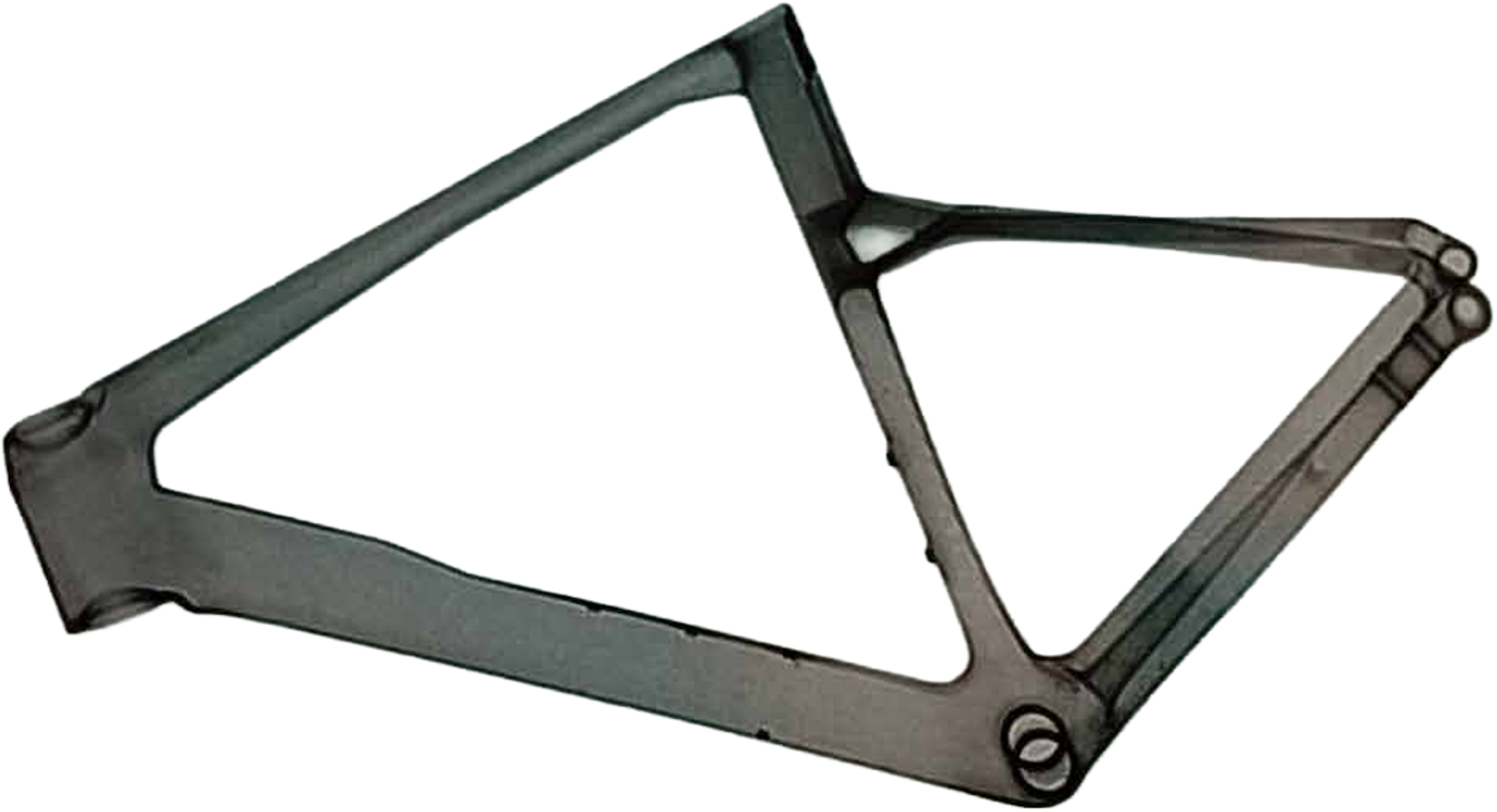
The ExAero uses the UDH rear derailleur hanger standard. This is a small detail with a disproportionate practical benefit: UDH hangers are a common part rather than a proprietary one, so a replacement can be sourced from most shops rather than ordered from a distributor. It also provides the mounting foundation for UDH-compatible drivetrains, which keeps future groupset options open.
Seven Sizes, Consistent Character
The ExAero spans seven linear sizes from 44 to 61 — a range that runs from a 150cm rider to a 199cm rider, which is broader than most aero platforms attempt.
Extending a size range that far usually costs handling consistency. Small frames end up twitchy, large frames end up vague, and the bike no longer feels like the same machine at either end of the range. SEKA's response is to scale trail progressively rather than proportionally, tapering it from roughly 70.5mm on the 44 to 54mm on the 61. The smaller sizes get more trail because a shorter wheelbase and a smaller rider need more inherent stability; the larger sizes get less because the longer front centre supplies it instead.
Chainstays are fixed at 408mm across every size, giving a uniform pedalling platform and consistent rear-wheel behaviour regardless of frame size, while BB drop and wheelbase are adapted in step with each size.
The objective, as SEKA put it, is not to make each size identical in numbers — it is to make each size feel virtually identical in steering feedback, snap and high-speed composure. Every size should ride like the same ExAero.
| Size | Stack | Reach | Trail | Seat tube | Chainstay | BB drop | Front centre | Wheelbase | Head tube | Top tube | HTA | STA | Rake | Standover | Rider height |
|---|
| 44 | 502 | 365 | 70.5 | 440 | 408 | 75 | 571 | 967 | 99 | 494.8 | 70.5° | 75.5° | 47 | 716 | 150–160 |
| 49 | 512 | 371 | 64.8 | 449 | 408 | 75 | 573 | 969 | 106 | 503.4 | 71.4° | 75.5° | 47 | 725 | 158–167 |
| 52 | 526 | 377 | 58.5 | 460 | 408 | 74 | 574.5 | 971 | 118 | 527.8 | 72.4° | 74.0° | 47 | 739 | 165–173 |
| 54 | 542 | 383 | 58.0 | 480 | 408 | 73 | 577 | 974 | 133.7 | 538.4 | 73.0° | 74.0° | 44 | 757 | 171–179 |
| 56 | 563 | 391 | 57.0 | 500 | 408 | 73 | 589.5 | 986 | 154.4 | 559 | 73.2° | 73.5° | 44 | 776 | 177–185 |
| 58 | 586 | 399 | 55.5 | 520 | 408 | 73 | 602 | 999 | 177.7 | 572.6 | 73.4° | 73.5° | 44 | 797 | 183–191 |
| 61 | 612 | 406 | 54.0 | 544 | 408 | 72 | 615 | 1012 | 205 | 593.1 | 73.6° | 73.0° | 44 | 822 | 189–199 |
All measurements in millimetres unless stated. Fork length is 369.7mm across all sizes. Rider heights in cm.
Colourways
ExAero RDC
Mercury Limited Edition — limited to 200 framesets globally (Due December 2026)
Phantom BlackMarble White
ExAero
(Due September 2026)
NovaTempo
The Mercury is a genuine limited run rather than a seasonal finish. Two hundred framesets worldwide is a small allocation, and once the run is complete it will not be repeated.
Frameset Specifications| Specification | Detail |
|---|
| Frame weight — ExAero RDC | 820g (size 54, excl. paint and hardware) |
| Frame weight — ExAero | 935g (size 54, excl. paint and hardware) |
| Carbon | Toray T1100 + M46J high-modulus |
| Construction | Full one-piece moulding |
| Rear structure | WindEye — 106 N/mm vertical compliance |
| Rear derailleur hanger | UDH |
| Cockpit (UK specification) | Gladius ALTA — +25mm stack, identical reach |
| Cockpit weight | Gladius 320g / ALTA 335g (375×100, excl. paint and hardware) |
| Cockpit sizing | 19 combinations — stems 80–140mm; widths 355/400, 375/420, 395/440mm |
| Cockpit reach / drop | 76mm / 128mm |
| Sizes | 44, 49, 52, 54, 56, 58, 61 |
| Chainstay | 408mm, all sizes |
| Fork length | 369.7mm, all sizes |
| Bottle system | ExAero MAG — sold separately |
| Wind tunnel partner | AeroCoach — three completed test phases |
| Complete system saving vs. Spear | 11.63W / 0.00992 m² weighted CdA at 45km/h |
All aerodynamic figures are SEKA wind tunnel data measured at 45km/h in collaboration with AeroCoach, and are stated relative to the SEKA Spear. Frame and cockpit weights exclude paint and hardware; frame weights quoted for size 54, cockpit weights for the 375×100 configuration. Stiffness figures are SEKA's own composite lateral stiffness index. Geometry data from SEKA. Full test methodology and parameter settings are published in the ExAero White Paper. RDC = Racing Day Combatant.