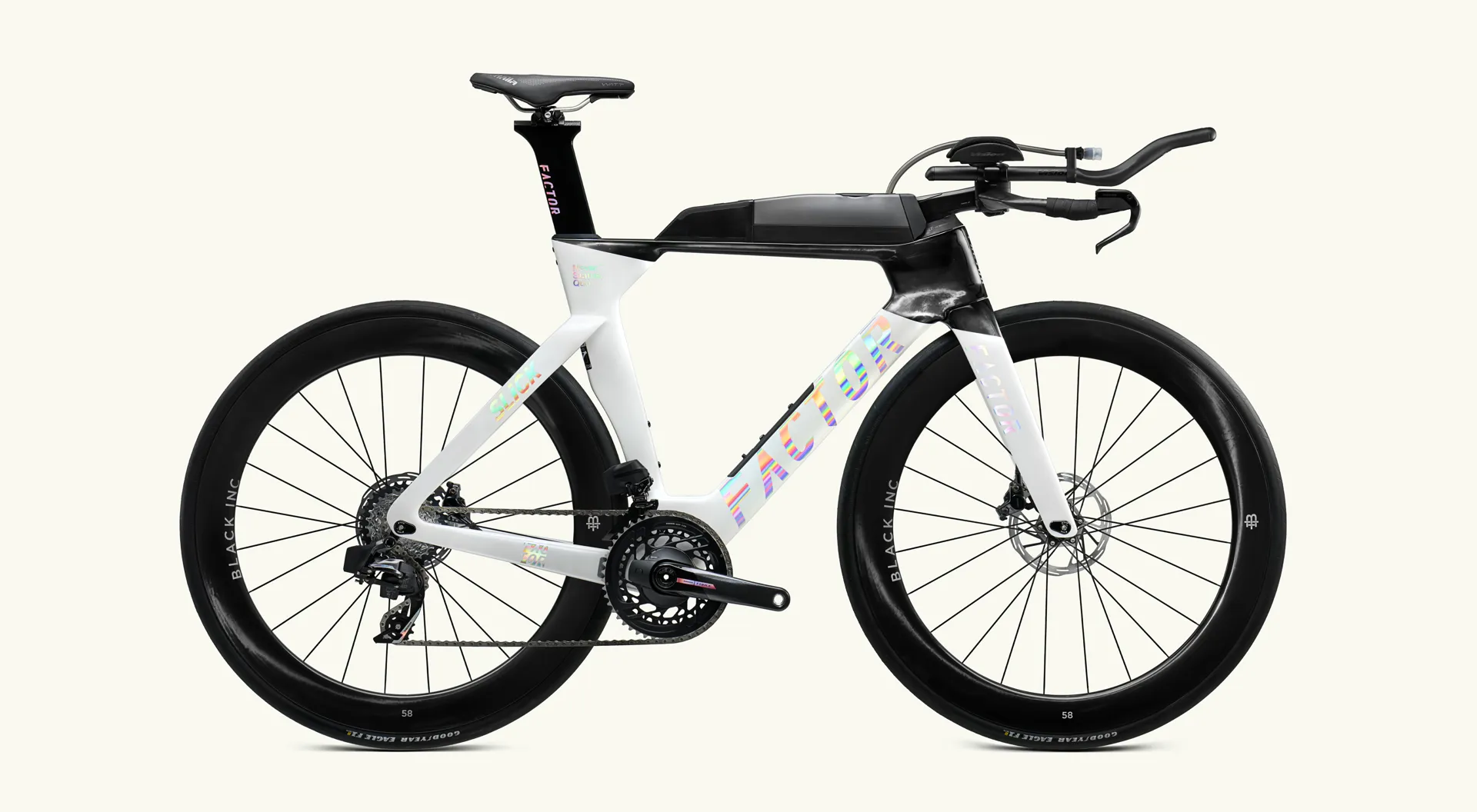
Factor are a race brand and we are not going to pretend otherwise. What is worth separating is which parts of a race bike ask something of the rider and which do not. Aerodynamics and weight ask nothing. A faster shape and a lighter frame change what the bike does, not what you have to do to ride it. Layup and position are a different matter and both are real. A stiff frame passes more of the road surface up to you. A low, long position asks more of your hips and your lower back. Those two decide whether a bike suits you, and across this range both are set by which model you buy rather than fixed across the brand.
Take the layup, where Factor are unusually open. They tune the ELARA “around torsional stiffness and impact control rather than comfort curves”, which means it passes more of the surface to the rider and they intended it to. Their own racer puts the benefit in those terms: “it means I don’t have to slow down.” The SARANA was built the other way round, on a leaf-spring seat stay system they claim cuts vibration amplitude by 18 per cent. Two bikes from one factory, built to opposite briefs, and Factor say plainly which is which.
Position works the same way. At a size 56 the MONZA and the O2 VAM carry 574mm of stack against the OSTRO VAM’s 565, with 389mm of reach against 392. Nine millimetres taller and three shorter does not sound like much. What it changes is how far you have to fold at the hip to reach the bars, which is the thing that decides whether the fourth hour is pleasant, and it is Factor’s own stated reason for the numbers. Combine this with the wider tyres on modern race bikes and the company's move to shorter cranks across their builds (helping with the hip angles again) - and you have reason to either ignore the race moniker or embrace your new found racer status! In short, don't rule them out based on a label. As always - a Bike Fit is the best money you can spend answering the question.
The ONE is the exception and it is a platform that is answering a specific demand - the agressive, aero position and weight distribution wanted by racers. Its reach is 20mm longer at every size and its seat angle around two degrees steeper, which moves the saddle forward by roughly as much as the bars. The distance between saddle and bars barely changes, so it is not a longer stretch than an OSTRO VAM. What changes is where you sit relative to the bottom bracket, with more of your weight carried towards your hands (that requires more reliance on your core) and the front wheel. That is the modern race position, it is a deliberate choice, and the other three road platforms do not ask it of you.
The useful question is not whether you race. It is which position you can hold and still enjoy the fourth hour, and which layup you want underneath you. Both are answerable with a chat.
The range
Below is an overview of each of the models in core ranges we deal with: Road, Gravel and Time Trial & Triathlon. We expand on those ranges in dedicated collections linked below.
Factor also build the LANDO mountain bike range and the HANZO Track and RAIDEN Track bikes, which sit outside this introduction. While we don't stock or list them, they are of course available to those customers who lust after them!
ROAD
ONE. The flagship, and Factor's answer to a rule change. They claim it is "over 8% faster than the OSTRO VAM" with that advantage sustained from zero to fifteen degrees of yaw, which is a comparison against their own previous fastest bike rather than against a rival. It employs an innovative geometry that balances the weight distribution for more aggressive race positions, while preserving a riders' relative position and to do so runs an integrated bar with no separate stem. It clears a 34mm tyre as measured, and holds identical steering geometry from the smallest frame to the largest. A prototype won a Dauphine stage before anyone knew what it was.
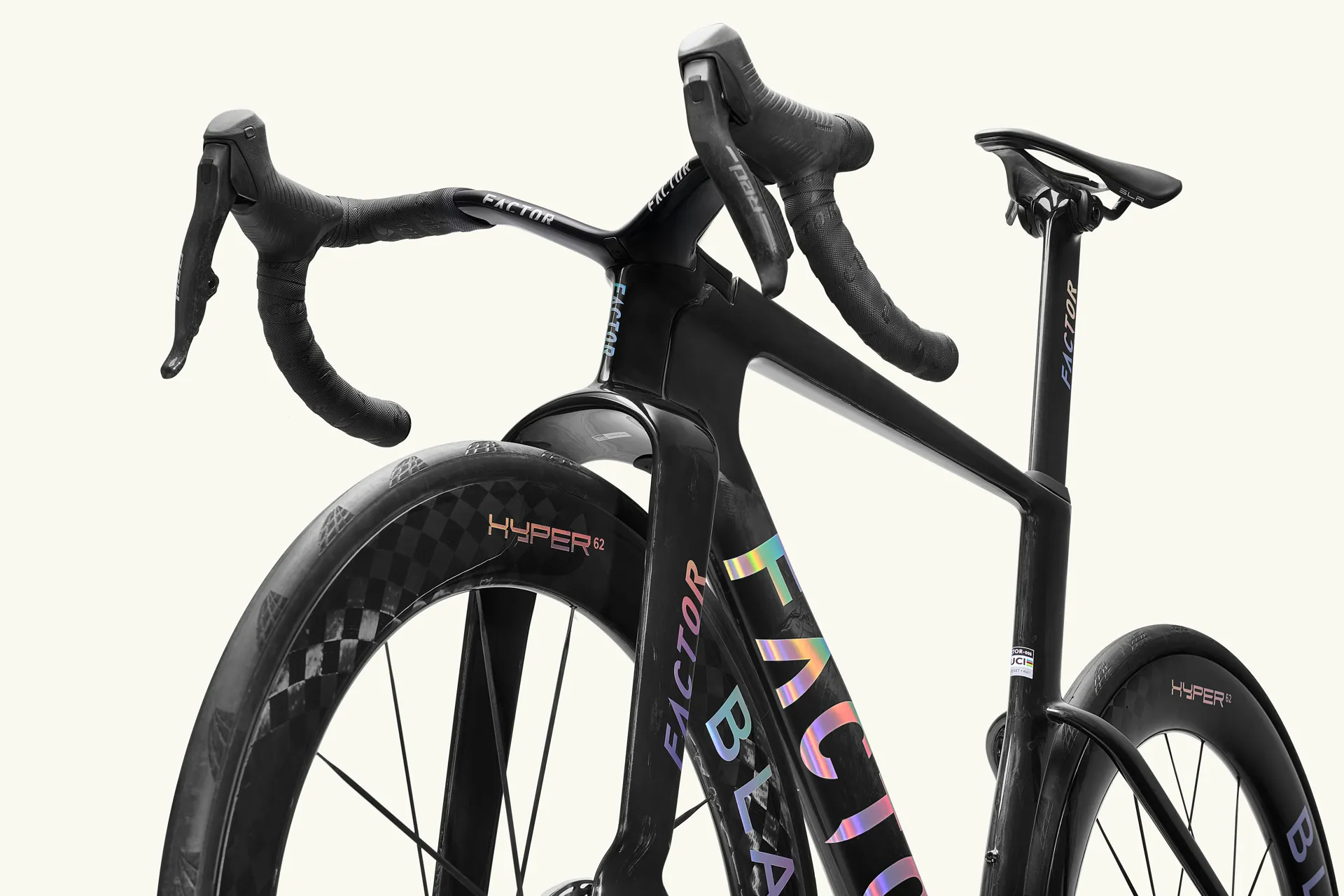
OSTRO VAM. The all-rounder, and the bike the rest of the range is measured against. A 900g frame, a complete build under seven kilos, and Factor's own figures put it 250 grams lighter and seven watts quicker than the bike it replaced. Factor's description of what that buys you is the most useful line on their website: 'your crit bike is also your mountainous gran fondo bike.' Seven sizes, 45 to 61, which is the widest size run in the road range.
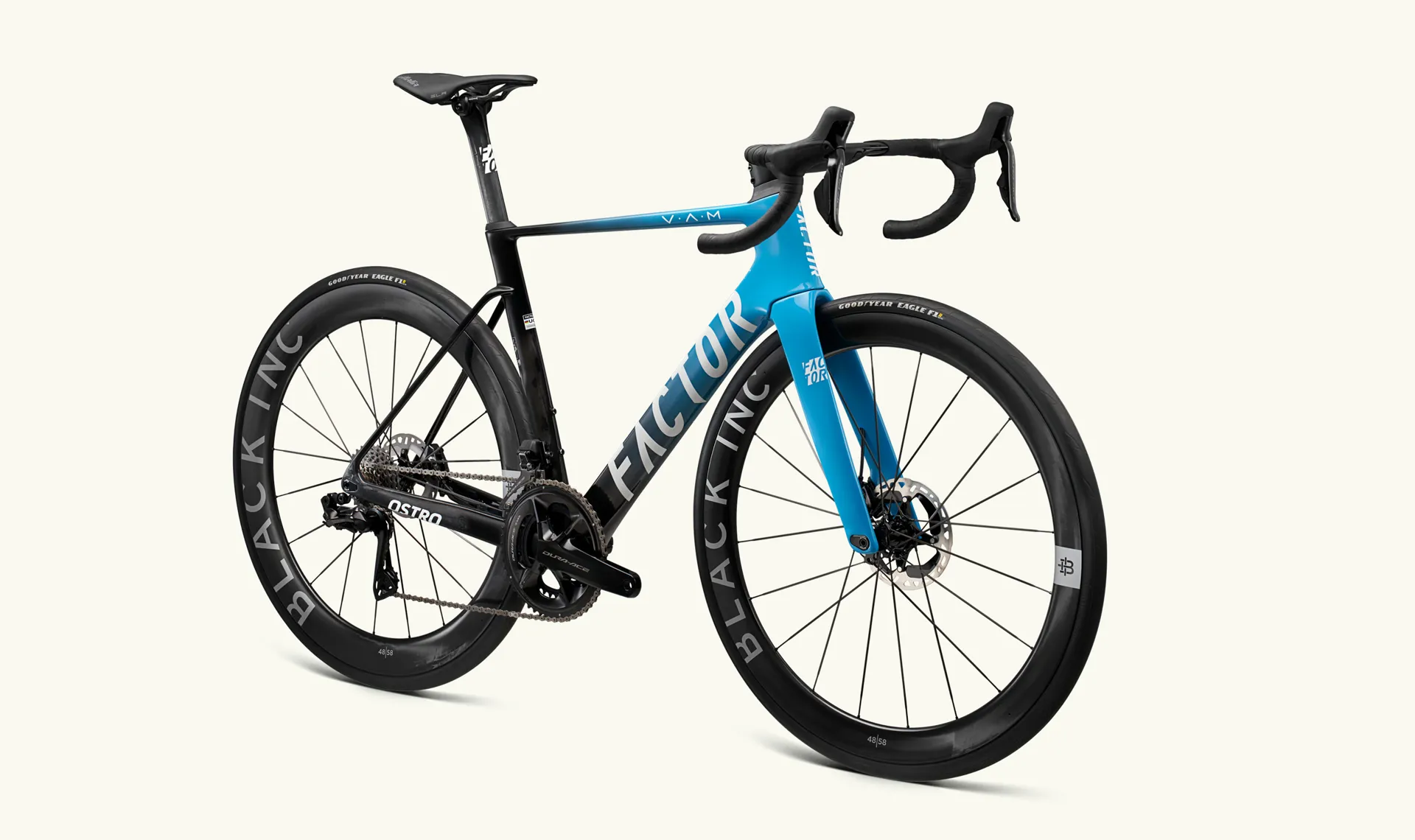
O2 VAM. The climbing bike, and the lightest frame Factor make. A 700g frame, and a complete bike from 6.4kg in a size 54 with Dura-Ace Di2, which is close enough to the UCI limit that a set of pedals and a bottle cage take care of the difference. The clever part is that it gives up very little in the wind: Factor put it five watts behind the OSTRO VAM at low yaw, having halved the gap that existed between the previous generations. Tyre clearance is 32mm, the tightest in the range.
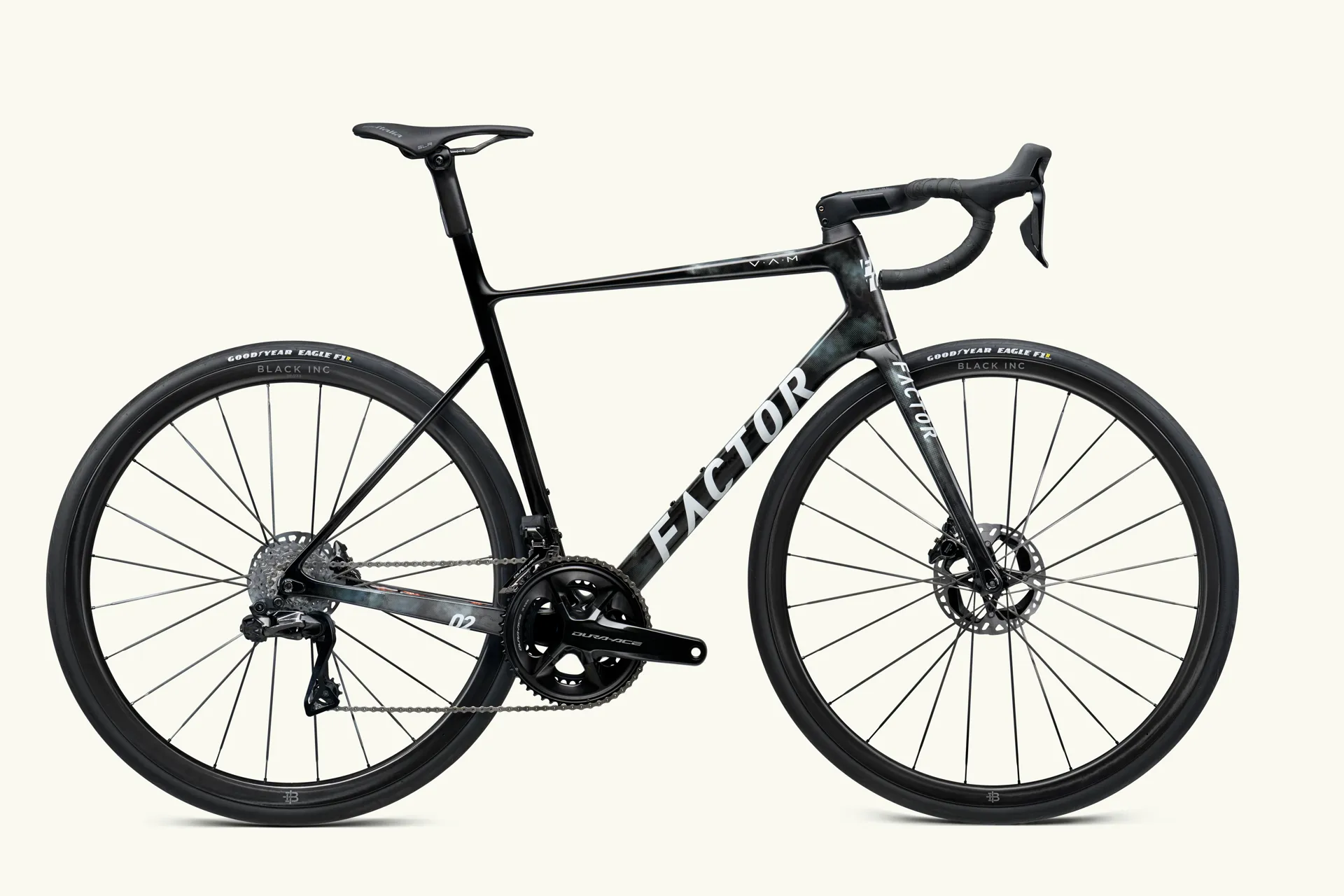
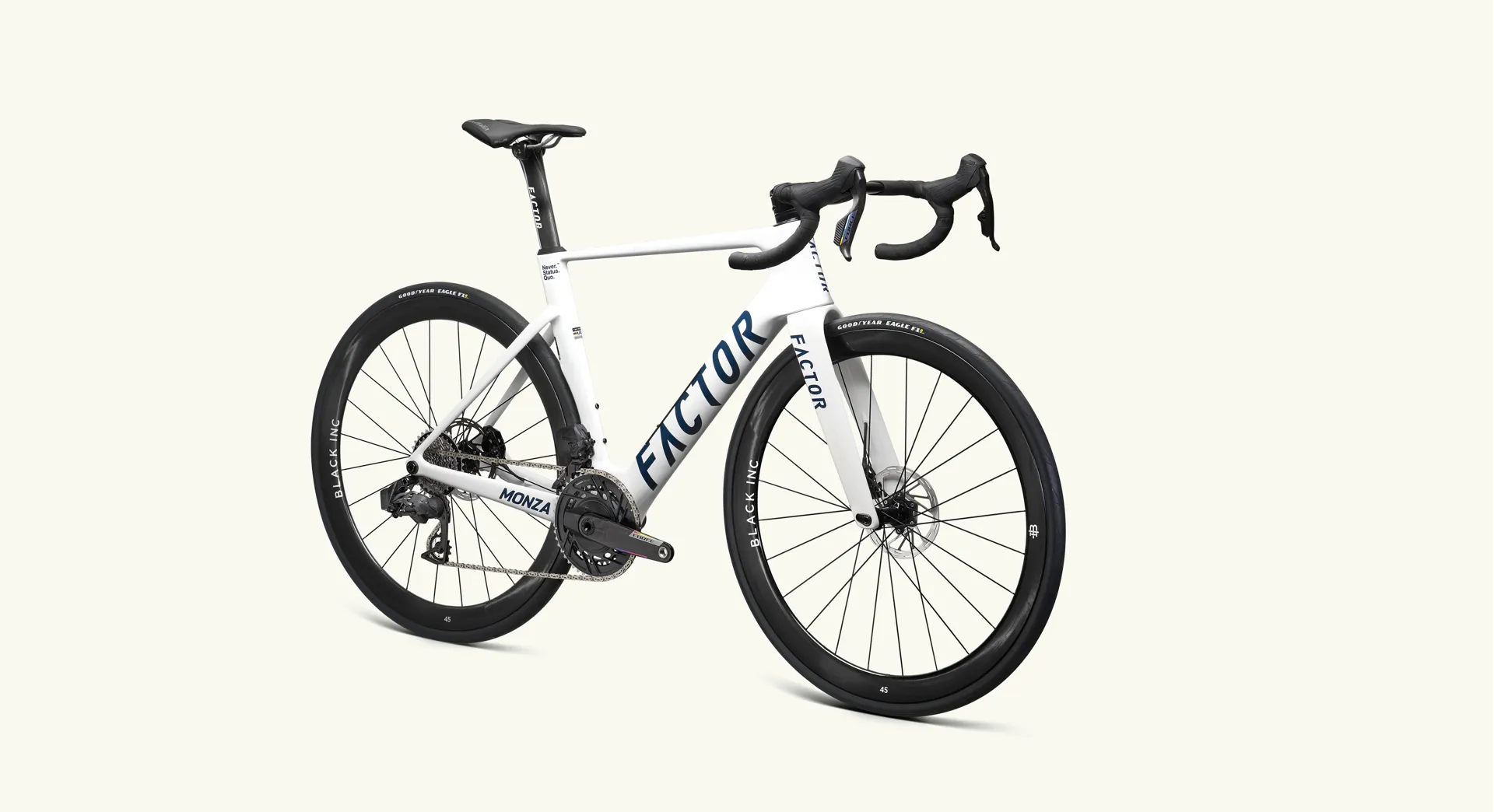
MONZA. "Race Sunday, Train Monday" - Factor's line, and the bike earns it with 34mm tyre clearance, in-frame down tube storage that takes two tubes, two CO2 cartridges and a patch kit. Featuring UDH compatibility for modern road setups, and a slightly taller stack to open up the hip angle. Factor are firm that it is "not a step down, it's a step in the right direction" and it will appeal to a broad audience from dedicated racers to old hands looking for the spritely feel they crave from fitter, more flexible times (that last bit is autobiographical!).
GRAVEL
The rapidly evolving Gravel scene is as broad in terms of rider as it is in surfaces traversed! After a stint with just one gravel platform, Factor now run three dedicated chassis: ELARA for Race Speed, ALUTO for Race Balance, and SARANA for Race Endurance.
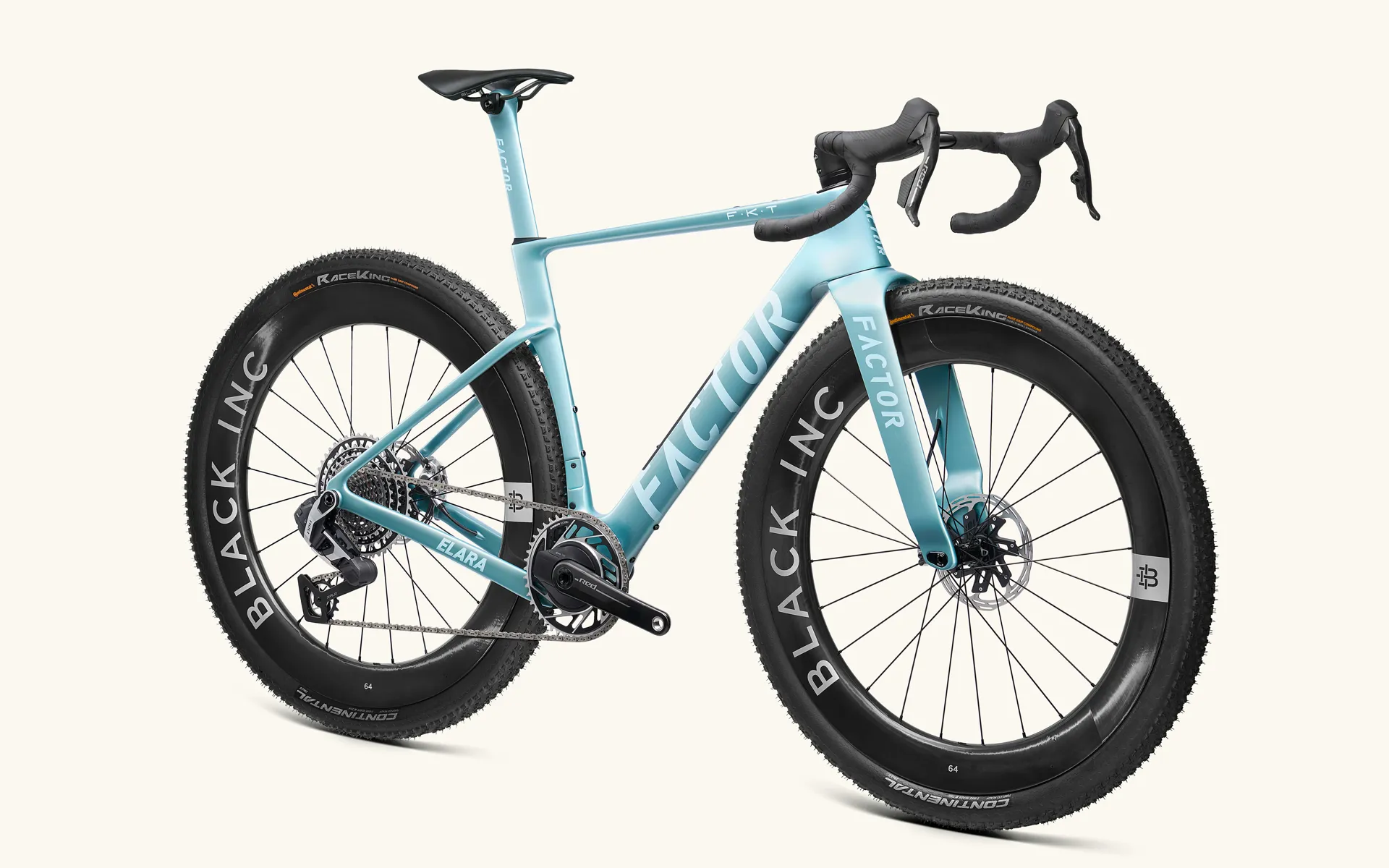
ELARA. The fast one, and the one with the medals. Magnus Bak Klaris won the 2026 UCI Gravel World Championships on it. The frame is a true monocoque rather than a front triangle bonded to the stays, which is what lets the chainstays stay thin enough to clear a 57mm tyre on a 1x setup, and it comes in under 1100 grams painted in a medium. Factor claim a five to eight per cent lower drag coefficient than the OSTRO Gravel it replaces. Independently, Cyclingnews measured the frame on its own at Silverstone as "the most aerodynamic gravel bike we've ever tested, by a pretty significant margin." Six sizes, 49 to 61.
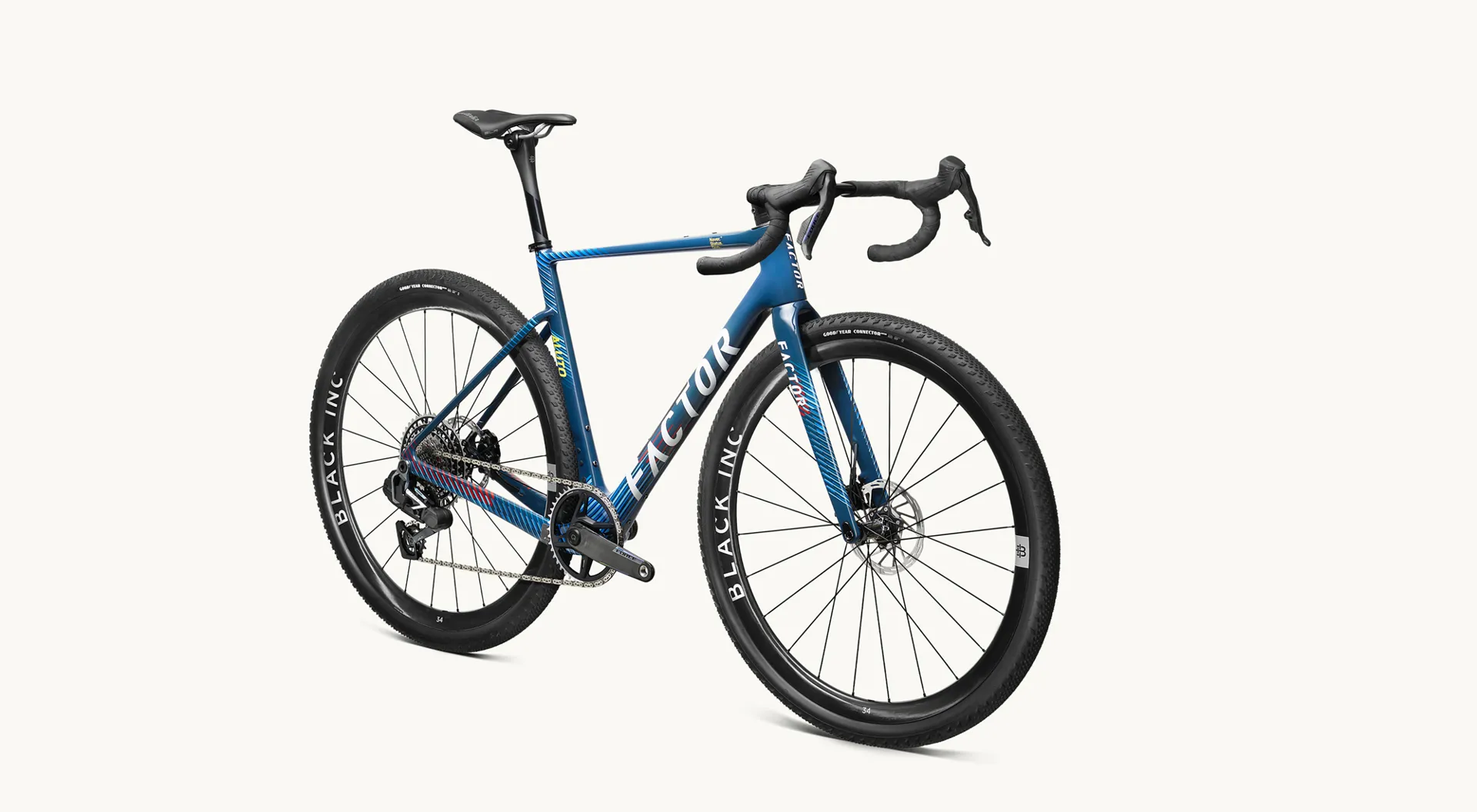
ALUTO. The bike that arguably most riders should look at first, and Factor pre-empt the obvious misreading of positioning with the qualifier that the ALUTO stands beside the ELARA rather than below it. A slightly taller stack than the ELARA for a more adaptable fit, short chainstays, a lowered bottom bracket, and a round 27.2mm seatpost that takes a dropper. It is the only one of the three that runs happily as either 1x or 2x. The trade is tyre clearance, at 47mm measured in the rear against the other models' 57mm, which matters depending on goals and riding. Six sizes, 49 to 61.
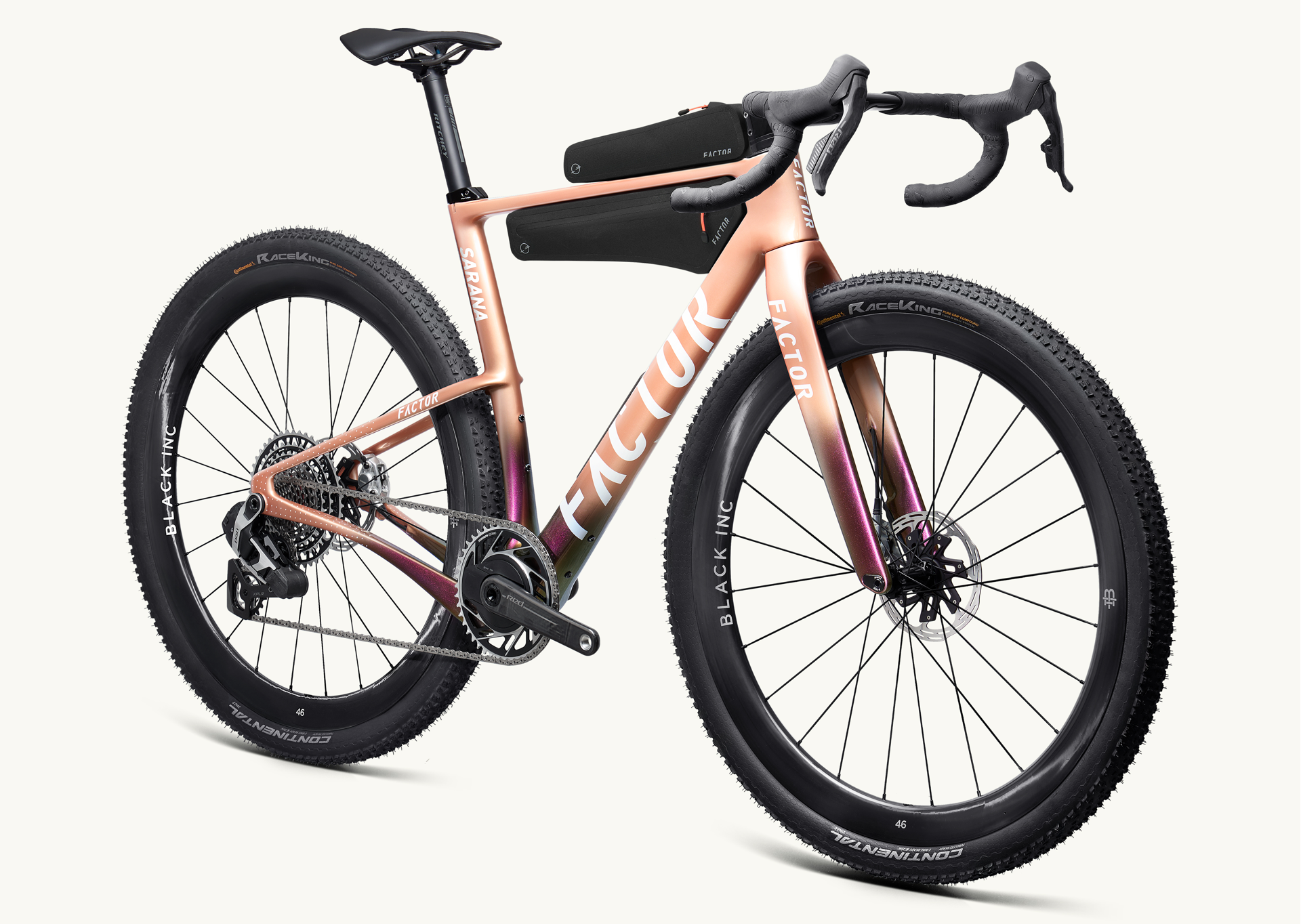
SARANA. The distance bike, developed with Rob Britton, the 2025 Unbound XL champion, and built around a leaf-spring seat stay system meant to take the sting out of hour twenty rather than hour two. It clears a 57mm tyre, takes a 30mm travel suspension fork without altering the geometry, runs a 30.9mm dropper, and comes with bolt-on frame bags developed with Post Carry. Victor Bosoni won the Traka 560 on it in its first official race and then set a Tour Divide FKT. Five sizes, 49 to 58, so it stops short of the 61 the other two offer.
TT and TRI
Factor's range page covers this category with one line: "Perfect for Kona or the WorldTour." Those are quite different propositions, and Factor build options.
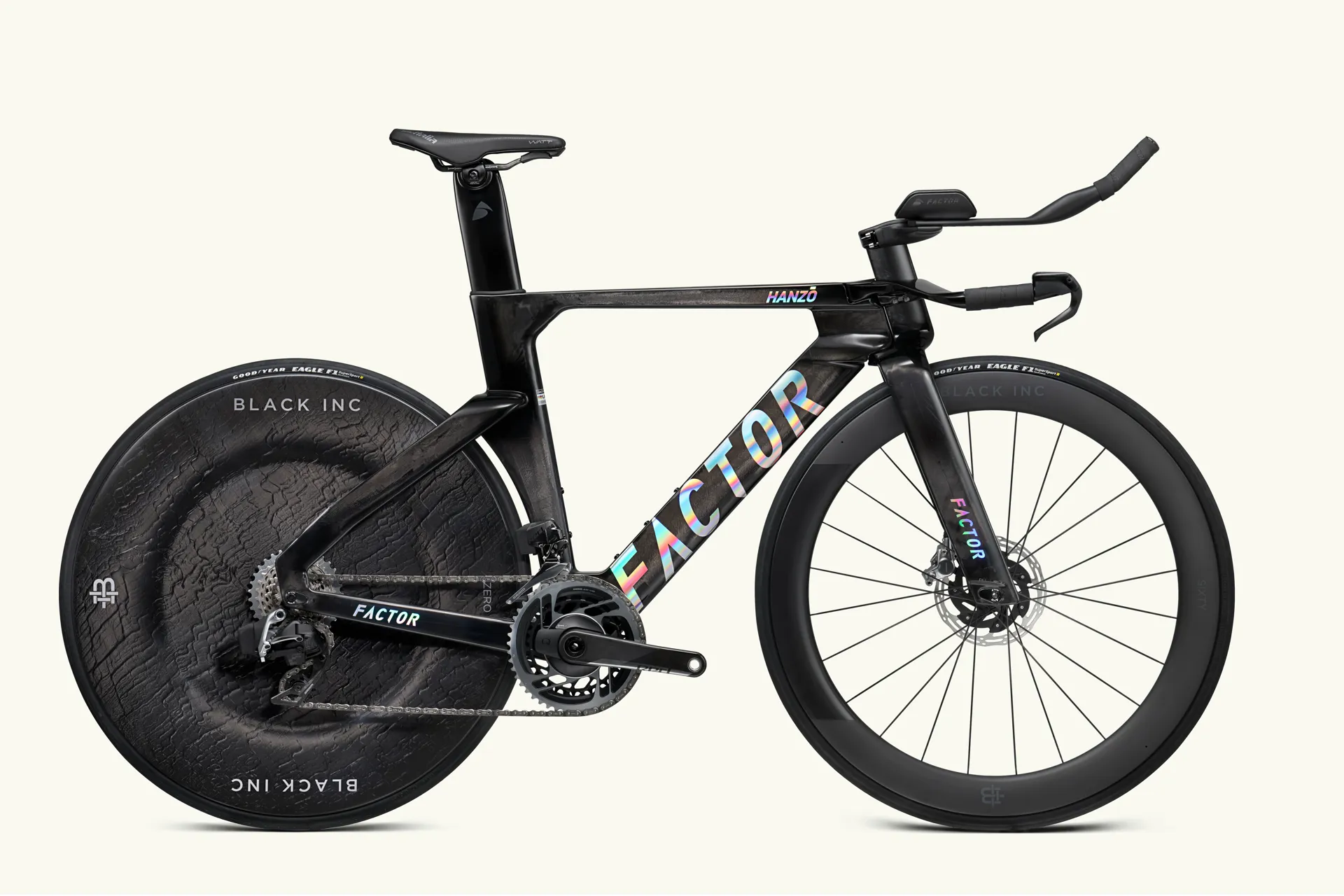
HANZO. The UCI time trial bike, and the only one of the three Factor describe as 100% UCI compliant. It exists to exploit the revised rule allowing a one centimetre minimum tube section, and Factor put the projected area 31 per cent below the SLiCK's as a result. The front end is a single moulded fork and mast with a one-piece base bar, which is where the aero comes from and also why the fit is a considered decision: the mast is cut to length at build. Extensions from AeroCoach, WattShop and Black Inc all fit. Rudy von Berg finished third at Kona in 2024 on one.
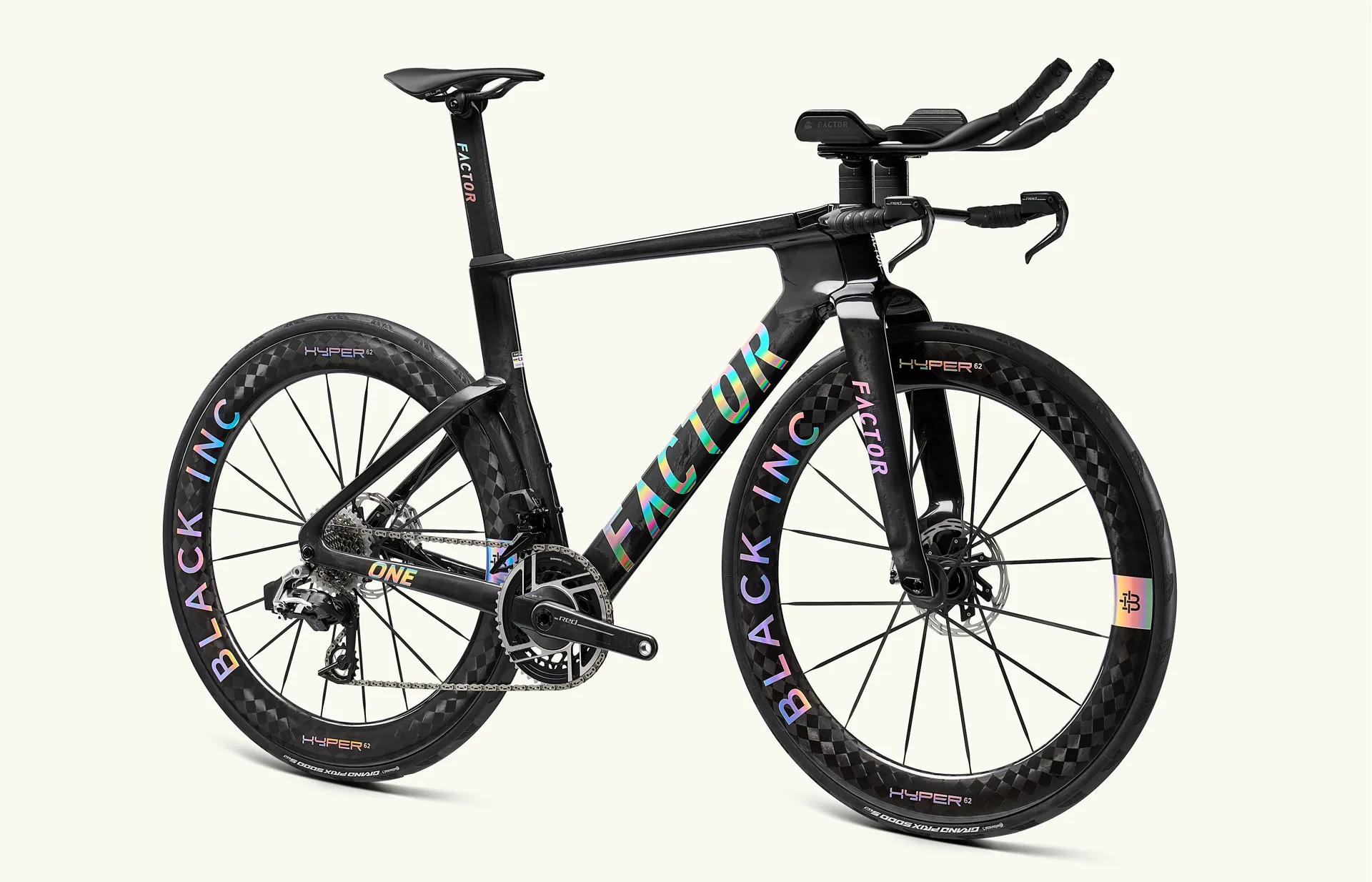
ONE SP. The ONE platform with a time trial front end, and the most versatile of the three. It offers road bike handling, agility, and low weight, with the advantage of a super-aero time trial or triathlon position. The ONE SP Bar gives pad adjustment through an optional 10mm at the bar and up to 35mm of extension stack in 5mm increments, and it arrives with a bar-mounted accessory holder. Nick Thompson rode one to the third-best bike split of all finishers at Kona in 2026. Five sizes, 47 to 58.
SLiCK. The dedicated triathlon specialist, and the most accommodating bike Factor make. Factor call the geometry democratic and say it accommodates a high percentile of cyclist's sizes with a special focus on smaller riders. It is the only one of the three with a standard round steerer, so third-party base bars, risers and extensions all fit, and the only one Factor describe as travel-friendly as the steerer allows for easier assembly and disassembly. There is in-frame storage under the down tube bottle cage, bosses for a bento box and a hydration reservoir, and 42mm of saddle setback adjustment. Against the previous SLiCK, Factor claim around six watts at 48kph and a twelve per cent aerodynamic improvement.